
- August 6, 2026
- admin
- 0
Taking an education loan can help students manage the cost of higher education without paying the entire expense upfront. However, once the repayment period begins, understanding your education loan EMI becomes important for managing your finances effectively.
Knowing how your EMI is calculated, what factors affect it, and how to plan your repayment can help you avoid financial stress and make better borrowing decisions.
In this guide, we explain how education loan EMI works and how you can plan your repayment responsibly.
What Is an Education Loan EMI?
EMI, or Equated Monthly Instalment, is the fixed amount a borrower generally pays to the lender every month towards repaying a loan.
An education loan EMI typically consists of two components:
-
Principal: The original amount borrowed.
-
Interest: The cost charged by the lender for providing the loan.
As you continue making repayments, the outstanding principal generally decreases according to the loan’s repayment schedule.
How Is Education Loan EMI Calculated?
Education loan EMI depends mainly on three factors:
-
Loan Amount
-
Interest Rate
-
Repayment Tenure
The standard EMI formula is:
EMI = P × R × (1 + R)ⁿ / [(1 + R)ⁿ – 1]
Where:
-
P = Principal loan amount
-
R = Monthly interest rate
-
n = Total number of monthly instalments
The interest rate needs to be converted into a monthly rate before using the formula.
Example of Education Loan EMI Calculation
Suppose a student takes an education loan of ₹5,00,000 at an annual interest rate of 10% for a repayment period of 5 years.
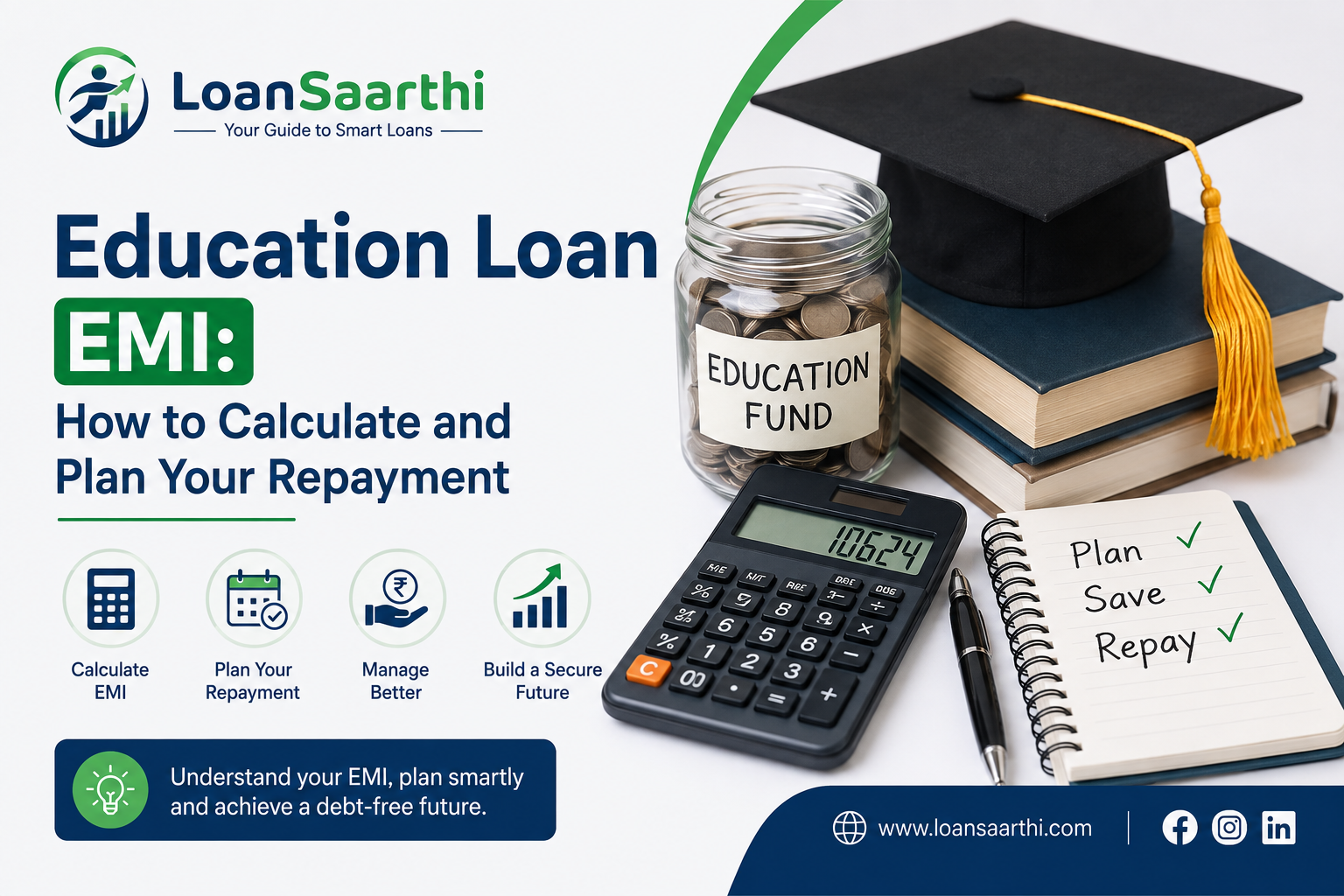
The approximate monthly EMI would be around ₹10,624.
The actual EMI can differ depending on the lender’s interest calculation method, repayment structure, applicable fees, and the terms of the specific loan agreement.
Factors That Affect Your Education Loan EMI
Your EMI isn’t determined by the loan amount alone. Several factors can influence the monthly repayment.
1. Loan Amount
A higher loan amount generally results in a higher EMI if the interest rate and tenure remain unchanged.
Before borrowing, estimate the total education expenses and try to borrow only what is reasonably required.
2. Interest Rate
The interest rate has a direct impact on the total repayment cost.
A higher interest rate can increase both the EMI and the overall interest payable over the repayment period.
3. Repayment Tenure
The tenure is the amount of time available to repay the loan.
A longer tenure may reduce the monthly EMI, but it can result in paying interest for a longer period. A shorter tenure may increase the monthly EMI but can potentially reduce the total interest cost.
4. Moratorium Period
Education loans may have a moratorium period according to the lender’s terms.
Depending on the loan agreement, interest may continue to accrue during this period. Understanding how the moratorium affects the outstanding balance is important when planning your future repayments.
What Is the Education Loan Moratorium Period?
A moratorium period generally provides a temporary period before regular loan repayment begins.
For education loans, the moratorium may cover the course period and an additional period after completion, depending on the lender and loan scheme.
However, a moratorium does not necessarily mean that interest stops accumulating.
Before taking the loan, check:
-
When interest starts accumulating
-
Whether simple or compound interest applies
-
When EMI repayment begins
-
Whether accrued interest is added to the principal
-
What repayment schedule applies after the moratorium
Understanding these details can help you estimate your actual repayment obligation.
How to Plan Your Education Loan Repayment
Planning repayment before your EMI starts can make the process easier.
1. Estimate Your Future EMI
Before accepting an education loan, calculate the expected EMI based on the loan amount, interest rate, and tenure.
This helps you understand how much you may need to pay every month after repayment begins.
2. Understand Your Total Repayment
Don’t look only at the monthly EMI.
Check the total amount payable over the complete tenure, including the total interest component and applicable charges.
A lower EMI may look attractive, but a longer tenure can increase the overall interest cost.
3. Create a Monthly Budget
Once you start earning, create a monthly budget that includes your education loan EMI along with other essential expenses.
A simple budget can include:
-
Monthly income
-
Education loan EMI
-
Rent or accommodation
-
Food and transportation
-
Bills and subscriptions
-
Savings
-
Emergency fund
-
Other financial commitments
This can help you manage your repayment without affecting essential expenses.
4. Keep an Emergency Fund
Unexpected expenses can make loan repayment difficult.
Building an emergency fund can provide a financial cushion for unexpected situations and reduce the risk of missing an EMI.
5. Make Extra Payments When Possible
If your financial situation allows, making additional payments towards the loan may help reduce the outstanding balance and potentially reduce the total interest cost.
However, check the lender’s terms regarding part-prepayment or foreclosure charges before making additional payments.
Should You Start Paying Interest During the Course?
If your lender allows or requires interest servicing during the study period or moratorium, you should understand how doing so affects your overall repayment.
In some situations, paying applicable interest earlier may help prevent the outstanding amount from increasing as much before regular EMI repayment begins.
However, the financial impact depends on the loan terms, so borrowers should compare the numbers before making a decision.
Education Loan EMI vs Loan Tenure
Choosing the right tenure involves balancing your monthly affordability with the overall cost of borrowing.
Shorter Tenure
Advantages:
-
Higher EMI
-
Loan can be repaid sooner
-
Potentially lower total interest cost
Considerations:
-
Higher monthly financial commitment
-
May be difficult during the early stages of a career
Longer Tenure
Advantages:
-
Lower monthly EMI
-
More manageable monthly repayment
Considerations:
-
Longer repayment period
-
Potentially higher total interest cost
The right tenure depends on your income, financial commitments, and repayment capacity.
Tips to Manage Your Education Loan EMI
Follow these practical tips to manage your repayment:
-
Calculate your EMI before accepting the loan.
-
Understand the complete repayment schedule.
-
Keep track of your EMI due date.
-
Maintain sufficient funds in your repayment account.
-
Read the lender’s prepayment conditions.
-
Avoid taking unnecessary additional debt.
-
Review your finances when your income changes.
-
Contact the lender promptly if you anticipate repayment difficulties.
Common Mistakes to Avoid
Students and borrowers should avoid these common mistakes:
Ignoring the Interest During the Moratorium
A moratorium doesn’t always mean that interest stops accumulating. Check the loan agreement carefully.
Choosing a Tenure Only Because of a Low EMI
A low EMI can sometimes come with a longer repayment period and higher total interest cost.
Not Checking Additional Charges
Processing fees, late payment charges, prepayment conditions, and other applicable charges can affect the total cost of the loan.
Borrowing More Than Necessary
Taking a larger loan than required can increase the future EMI and total repayment burden.
Frequently Asked Questions
How is education loan EMI calculated?
Education loan EMI is generally calculated using the loan amount, applicable interest rate, and repayment tenure. Lenders use an EMI formula to determine the monthly instalment.
Can education loan EMI change?
It depends on the type of interest rate and the terms of the loan. A fixed-rate structure may have different implications from a floating-rate structure. Always check the lender’s agreement.
Does the education loan EMI start immediately?
Not necessarily. Education loans may have a moratorium period, depending on the lender and loan scheme. Check the exact repayment schedule before accepting the loan.
Can I repay my education loan early?
Early repayment or part-prepayment may be possible depending on the lender’s terms. Check applicable conditions and charges before making an additional payment.
Is a longer education loan tenure better?
A longer tenure can reduce the monthly EMI, but it may increase the total interest paid over the life of the loan. The suitable tenure depends on your repayment capacity and financial goals.
Final Thoughts
Understanding your education loan EMI before taking a loan is an important part of responsible financial planning.
Don’t focus only on getting the lowest possible monthly EMI. Consider the interest rate, total repayment amount, loan tenure, moratorium period, and your expected future income before choosing a repayment structure.
By calculating your EMI in advance and creating a realistic repayment plan, you can manage your education loan more effectively and work towards becoming debt-free without unnecessary financial pressure.
LoanSaarthi helps you understand loan-related information so you can compare your options and make more informed financial decisions.
Disclaimer: Education loan interest rates, EMI calculations, repayment schedules, moratorium periods, fees, prepayment conditions, and other terms vary by lender and applicant profile. The examples provided are for educational purposes only and may not represent an actual loan offer. Always verify the latest terms and conditions with the relevant lender before making a financial decision.