
- August 12, 2026
- neeraj upreti
- 0
When you plan to borrow money, one of the first decisions you may need to make is whether a secured loan or an unsecured loan is right for you. Both types of loans can help you manage financial needs, but they differ in terms of collateral, interest rates, loan amounts, eligibility, and risk.
Understanding these differences can help you choose a loan that better matches your financial situation.
What Is a Secured Loan?
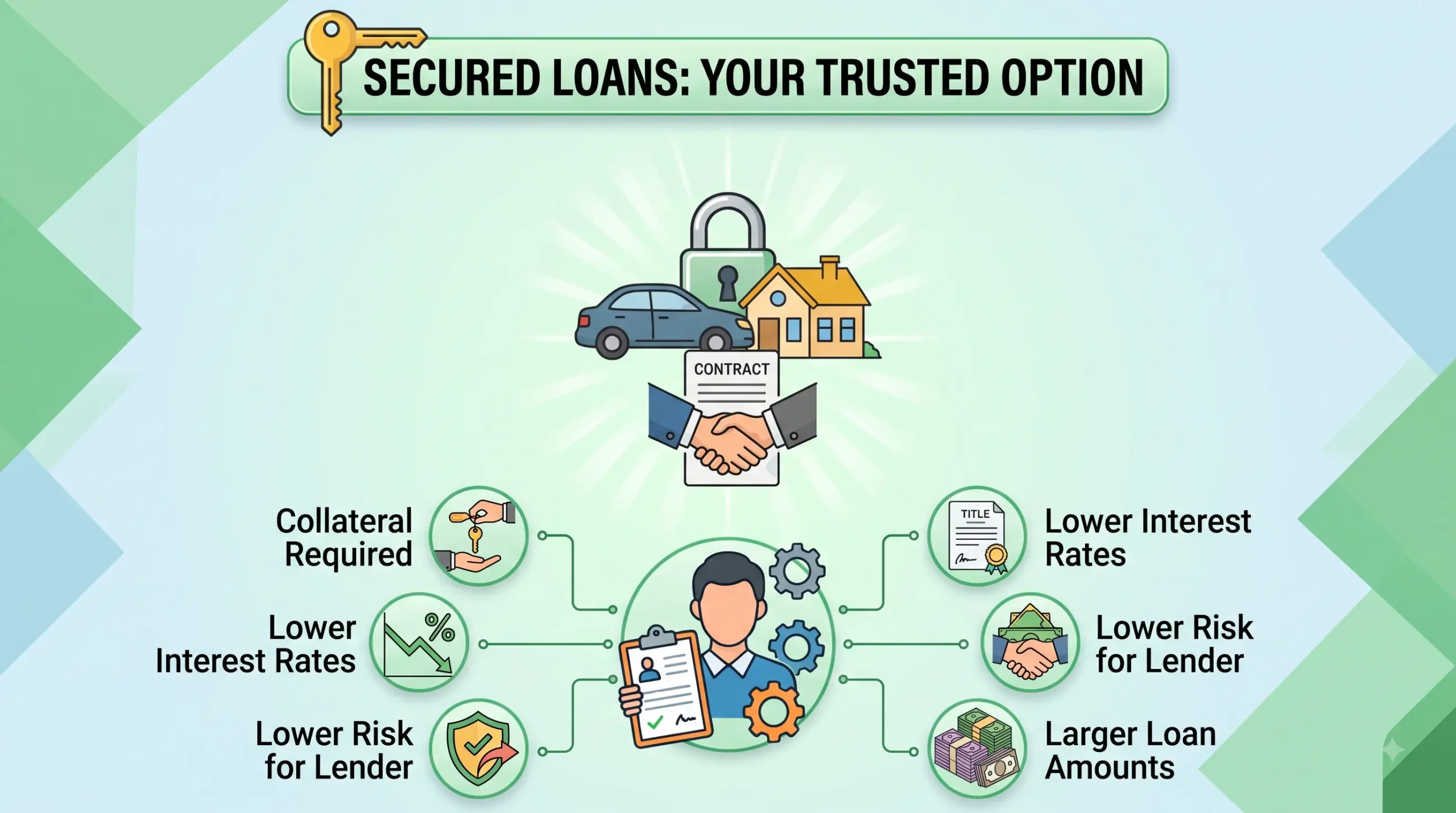
A secured loan is a loan backed by an asset known as collateral. The borrower pledges an asset to the lender as security against the loan.
Common examples include:
Home loans
Loan against property
Gold loans
Car loans
Because the lender has an asset as security, secured loans may offer comparatively lower interest rates and higher loan amounts, depending on the lender and the value of the collateral.
What Is an Unsecured Loan?
An unsecured loan does not require the borrower to provide an asset as collateral. Instead, lenders generally evaluate factors such as credit history, income, employment, existing liabilities, and repayment capacity.
Common examples include:
Personal loans
Credit card loans
Some business loans
Certain short-term credit facilities
Since there is no collateral, lenders may consider unsecured loans to carry a higher level of risk, which can affect the interest rate and loan terms.
Secured vs Unsecured Loans: Key Differences
| Feature | Secured Loan | Unsecured Loan |
|---|---|---|
| Collateral | Required | Not required |
| Interest Rate | Usually lower | Usually higher |
| Loan Amount | Can be higher | Often depends strongly on income and credit profile |
| Approval | May involve asset verification | Primarily based on financial profile |
| Processing | Can take longer due to collateral checks | Can be quicker in some cases |
| Risk | Pledged asset may be at risk if repayments are not made | No specific collateral is pledged |
Which Loan Should You Choose?
A secured loan may be suitable when you need a larger amount and have an eligible asset that you are comfortable pledging as collateral.
An unsecured loan may be more suitable when you need funds without pledging an asset and have a strong income and credit profile.
The right choice depends on your loan requirement, repayment capacity, financial profile, and the terms offered by the lender.
Things to Consider Before Taking a Loan
Before applying for any loan, consider:
Interest rate – Compare the applicable interest rates and understand whether the rate is fixed or variable.
EMI affordability – Make sure the monthly repayment fits comfortably within your budget.
Loan tenure – A longer tenure can reduce the EMI but may increase the overall interest paid.
Processing and other charges – Check processing fees, prepayment charges, late-payment charges, and other applicable costs.
Repayment capacity – Borrow an amount that you can realistically repay on time.
Final Thoughts
Secured and unsecured loans serve different financial needs. A secured loan uses collateral and may offer more favorable terms, while an unsecured loan provides borrowing without pledging an asset.
Before choosing a loan, compare the complete terms and consider your financial situation rather than focusing only on the advertised interest rate.
If you are unsure which type of loan may suit your needs, LoanSaarthi can help you understand your available options and make a more informed borrowing decision.