
- August 12, 2026
- neeraj upreti
- 0
A personal loan can be useful for managing planned expenses, emergencies, education, home improvements, medical expenses, or other financial requirements. However, getting approved is not automatic. Banks and financial institutions evaluate several factors before deciding whether an applicant qualifies for a personal loan.
Understanding these factors before applying can help you prepare better and avoid unnecessary loan applications.
What Is Personal Loan Eligibility?
Personal loan eligibility refers to the criteria a lender uses to determine whether an applicant is suitable for a loan.
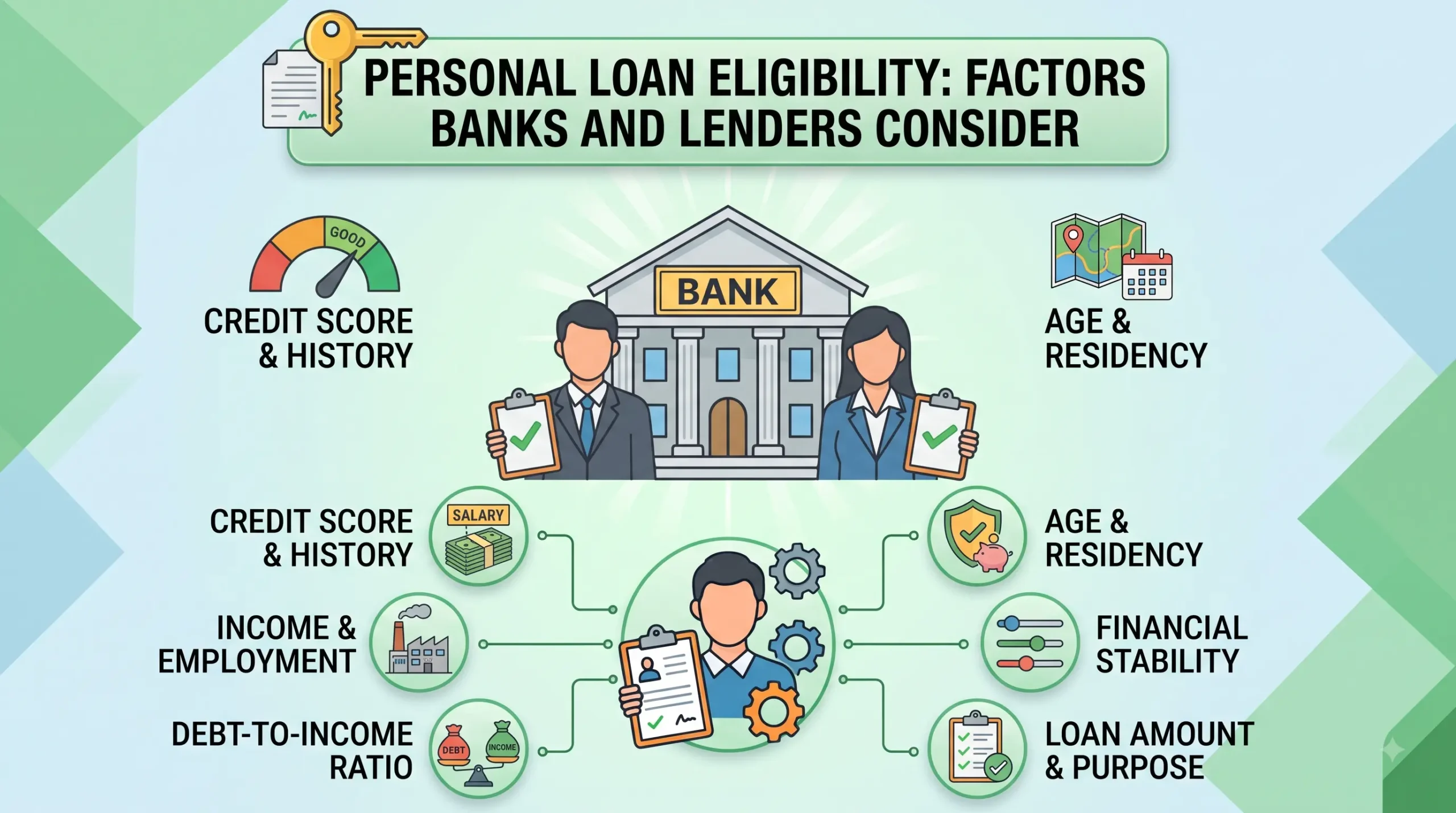
The exact requirements can vary between lenders, but commonly considered factors include:
Age
Income
Employment
Credit score and credit history
Existing loans and EMIs
Work experience
Repayment capacity
1. Age
Age is one of the basic eligibility criteria considered by lenders.
Lenders generally have minimum and maximum age requirements. Your age can also influence the available loan tenure because lenders want the loan to be repaid within their specified age limits.
2. Monthly Income
Your income helps the lender understand your repayment capacity.
A stable and sufficient income may improve your chances of qualifying for a personal loan. Lenders may consider salary, business income, or other eligible sources of income depending on their policies.
Higher income does not automatically guarantee approval, but it can influence the loan amount you may qualify for.
3. Employment and Work Experience
Employment stability can be important when applying for a personal loan.
Lenders may look at:
Current employer or business
Length of employment
Overall work experience
Employment type
Income stability
Salaried applicants and self-employed applicants may have different eligibility requirements depending on the lender.
4. Credit Score and Credit History
Your credit history provides lenders with information about how you have handled credit in the past.
A healthy credit profile can improve your chances of loan approval and may help you receive better terms. Late payments, defaults, or excessive outstanding credit can negatively affect your profile.
Before applying, it is useful to review your credit report and make sure the information is accurate.
5. Existing Loans and EMIs
Lenders also consider your existing financial obligations.
If you already have multiple loans or high monthly EMIs, your available repayment capacity may be lower. This can affect the loan amount a lender is willing to offer.
Managing existing debt responsibly can help maintain a healthier financial profile.
6. Debt-to-Income Ratio
The debt-to-income ratio compares your monthly debt obligations with your income.
For example, if a large portion of your monthly income is already committed to EMIs and other debt payments, a lender may consider your repayment capacity more limited.
Keeping your existing debt manageable can therefore be important when applying for additional credit.
How to Improve Your Personal Loan Eligibility
You can take several responsible steps before applying:
Maintain a healthy credit history.
Pay existing EMIs and credit-card bills on time.
Avoid applying for multiple loans within a short period.
Keep existing debt under control.
Maintain stable employment or income.
Borrow an amount that matches your repayment capacity.
Check lender-specific eligibility requirements before applying.
Final Thoughts
Personal loan eligibility depends on more than just your salary or credit score. Lenders generally look at your overall financial profile, including income, employment, credit history, existing obligations, and repayment capacity.
Before applying, compare different loan options and understand the eligibility criteria, interest rate, fees, tenure, and repayment terms.
LoanSaarthi can help you explore loan options and understand the factors that may affect your borrowing journey, so you can make a more informed financial decision.