
- August 20, 2026
- neeraj upreti
- 0
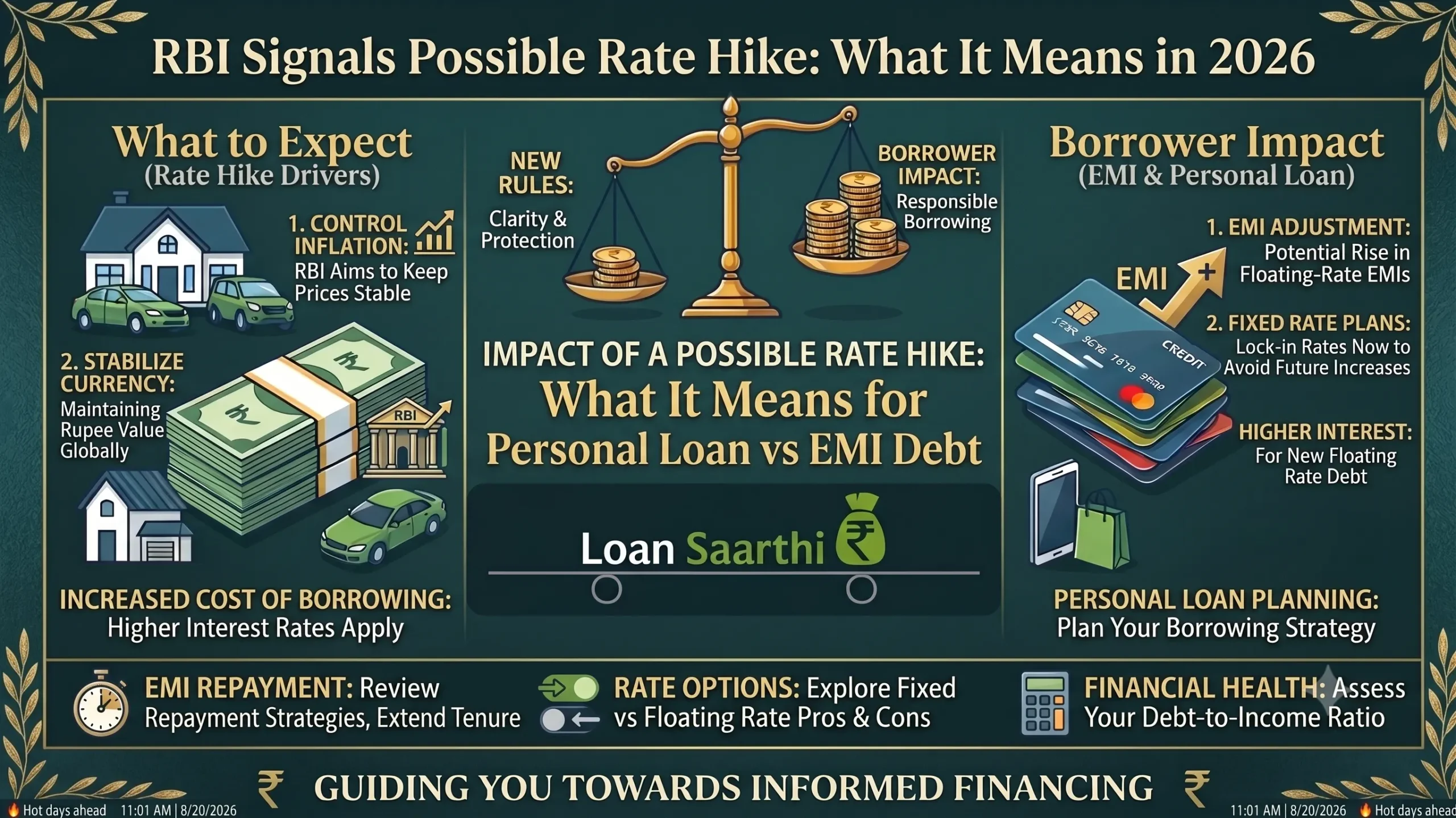
Borrowers across India need to monitor financial markets closely after the latest Reserve Bank of India (RBI) Monetary Policy Committee (MPC) minutes signalled that a future rate hike could be considered if inflationary pressures continue to rise.
While the central bank kept the repo rate unchanged at 5.25% during its policy meeting, policymakers expressed growing concerns regarding persistent inflation risks. These risks stem primarily from volatile global oil prices, fluctuating supply chains, and potential increases in domestic food and input costs. For millions of retail borrowers managing existing debts, the core question remains: how will this impact monthly financial commitments?
Why Is the RBI Considering a Possible Rate Hike?
Price stability remains the primary mandate of the central bank. Although India’s recent consumer inflation prints have hovered around manageable levels like 4.45%, economic policymakers look beyond headline numbers. They closely evaluate core inflation and the second-round effects of higher fuel, transportation, and agricultural input costs.
If these inflationary pressures gather momentum, the central bank may shift toward a tighter monetary stance. However, market participants should note that a future rate hike is a contingency plan rather than an immediate, announced policy change. You can read more about macroeconomic indicators on financial portals like The Economic Times or check out our detailed guide on understanding inflation and your finances.
What Is the Repo Rate and How Does It Work?
The repo rate represents the benchmark interest rate at which the RBI lends short-term funds to commercial banks. When this policy rate shifts, the cost of funds for banks changes accordingly. Transmission mechanisms dictate that higher repo rates push lending and deposit rates upward across the banking system.
Conversely, a lower repo rate aims to inject liquidity and stimulate economic growth through cheaper credit. However, the exact transmission timeline varies from one financial institution to another depending on liquidity conditions and credit growth.
What Could Happen to Personal Loan EMIs?
Existing retail borrowers, particularly those with floating-rate liabilities, face direct exposure to interest rate cycles. If your personal loan is linked to an External Benchmark Lending Rate (EBLR) or Repo-Linked Lending Rate (RLLR), any shift by the RBI translates quickly into revised borrowing costs.
When lending rates increase, banks typically offer two choices to borrowers:
- Increase the Monthly EMI: Your monthly outgo rises while keeping the original loan tenure intact.
- Extend the Loan Tenure: Your EMI remains unchanged, but you pay installments over a longer period, significantly raising total interest expenses.
Fixed-rate personal loans, on the other hand, shield borrowers from immediate market fluctuations because the interest rate remains locked for the agreed tenure. For strategic insights on managing your liabilities, check our comprehensive debt management strategies.
What About New Personal Loans and Borrowing Costs?
If overall market interest rates trend upward, prospective borrowers will inevitably face higher financing costs. Anyone planning to apply for credit should look beyond the promotional headline interest rate advertised by lenders. A transparent evaluation requires calculating the Actual Cost of the Loan:
Interest Rate + Processing Fees + Documentation Charges + Total Repayment Tenure = Actual Financial Burden
A marginally lower interest rate can occasionally be offset by heavy processing fees, prepayment penalties, or hidden administrative charges. Always review the terms thoroughly before signing an agreement.
Strategic Advice: Should You Take a Loan Before a Rate Hike?
Financial decisions should be driven by genuine necessity rather than market speculation. Taking on high-interest debt simply out of fear that interest rates might rise in the future is counterproductive. If a loan is essential—such as for medical emergencies, professional development, or verified asset creation—compare multiple lenders, evaluate your cash flow, and ensure your monthly obligations remain comfortable.
For individuals with existing loans looking to minimize interest outflow, making periodic prepayments or opting for a loan transfer to a lender offering better terms can yield significant long-term savings. Learn more about optimal repayment schedules on Moneycontrol.
Key Indicators Every Borrower Should Monitor
Navigating an evolving interest rate cycle requires staying informed. Keep track of these crucial factors:
- Official RBI Monetary Policy Committee announcements and repo rate revisions.
- Monthly Consumer Price Index (CPI) inflation releases.
- Your specific lender’s benchmark rate updates (EBLR or MCLR).
- Scheduled interest-rate reset dates specified in your loan agreement.
- Changes in your outstanding loan principal and cumulative interest payable.
While the central bank has not implemented an immediate rate hike and the repo rate holds steady at 5.25%, future tightening remains a distinct possibility if economic indicators dictate it. Personal loan borrowers should remain calm, evaluate their financial exposure, and prioritize sound budgeting over market panic.