
- August 25, 2026
- neeraj upreti
- 0
Sanction Letter vs Loan Agreement: Key Differences Borrowers Should Know
Introduction
Getting a loan approved can feel like the biggest hurdle is over. But once your lender approves your application, you may receive several important documents, including a loan sanction letter and a loan agreement.
Many borrowers assume these documents are the same. They are not.
Understanding the difference between a sanction letter and a loan agreement is important because each document serves a different purpose in the lending process.
A sanction letter generally communicates the lender’s decision and the broad terms on which the loan is being offered, while the loan agreement contains the contractual terms governing the loan relationship.
So, before signing or accepting any loan, it is important to know what each document means and what you should check.
Borrowers should also review important loan information such as the applicable interest rate, fees, repayment terms and other conditions before proceeding. The Reserve Bank of India (RBI) financial awareness guidance also advises borrowers to read loan-related documents carefully.
What Is a Loan Sanction Letter?
A loan sanction letter is a document issued by a lender after assessing your loan application.
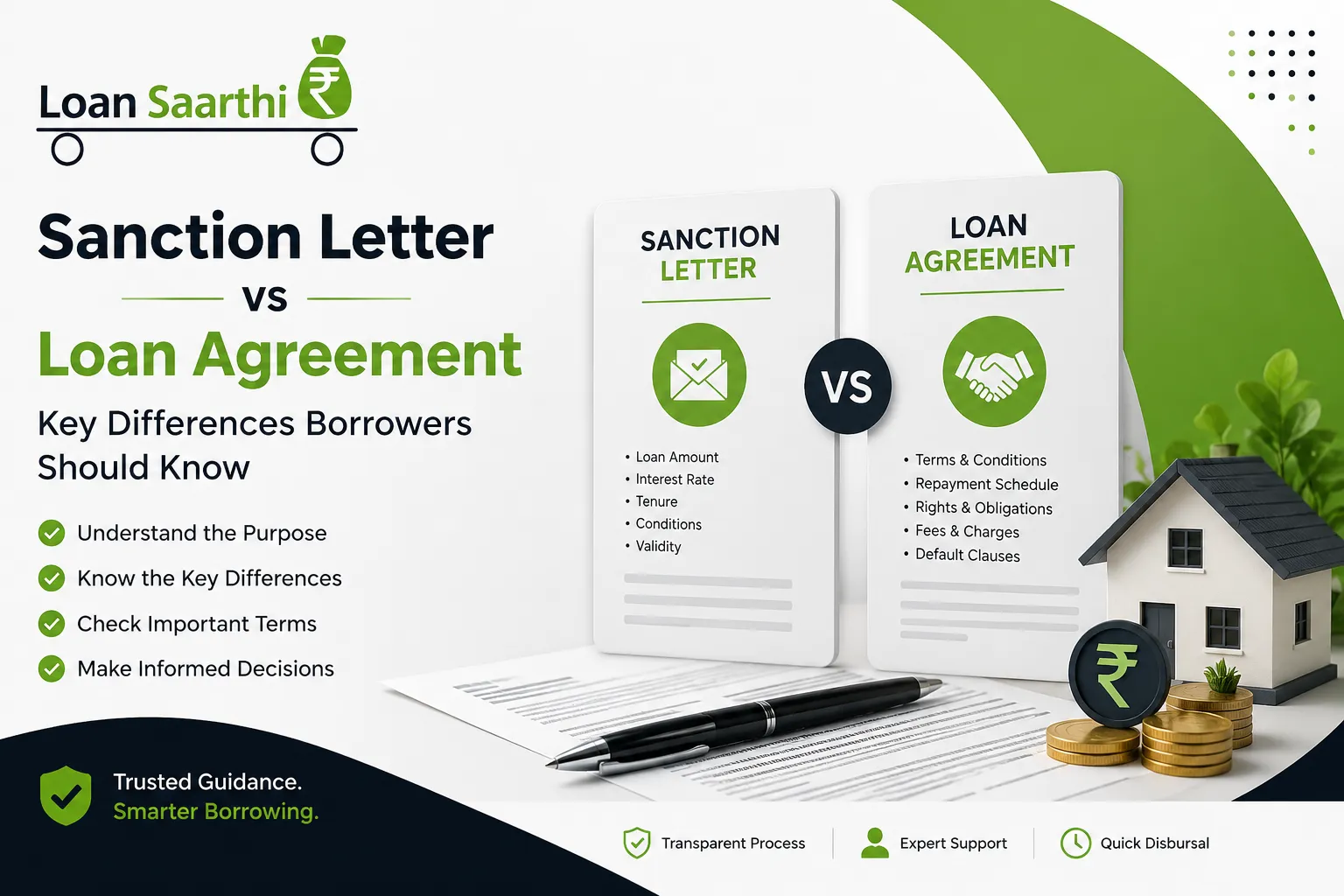
It generally communicates that the lender has approved or sanctioned a loan subject to specified terms and conditions. Depending on the lender and loan product, a sanction letter may include details such as:
- Sanctioned loan amount
- Applicable interest rate
- Loan tenure
- Repayment or EMI details
- Processing fees and other charges
- Conditions attached to the sanction
- Validity of the sanction
- Required documents
- Other important terms
However, receiving a sanction letter does not necessarily mean that the loan amount has already been disbursed.
The lender may still require completion of documentation, verification and other applicable conditions before disbursement.
What Is a Loan Agreement?
A loan agreement is the contractual document between the borrower and the lender. It sets out the detailed terms and conditions governing the loan.
Depending on the type of loan and lender, it can cover matters such as:
- Loan amount
- Interest rate
- Repayment schedule
- EMI obligations
- Fees and charges
- Default provisions
- Security or collateral, where applicable
- Prepayment or foreclosure terms
- Events of default
- Rights and responsibilities of the borrower and lender
- Conditions relating to repayment and recovery
Because the loan agreement creates the contractual framework for the borrowing relationship, borrowers should read it carefully before signing.
Sanction Letter vs Loan Agreement: Key Differences
| Feature | Loan Sanction Letter | Loan Agreement |
|---|---|---|
| Purpose | Communicates the lender’s loan approval and key terms | Sets out the contractual terms of the loan |
| When issued | Generally after loan assessment and approval | Usually during the documentation stage before or around disbursement |
| Main focus | Sanction and major loan conditions | Detailed rights, obligations and conditions |
| Loan amount | Usually mentioned | Mentioned as part of the contractual terms |
| Interest rate | Usually mentioned | Detailed contractual treatment |
| Repayment terms | Key repayment information may be included | Detailed repayment obligations |
| Legal role | Evidence of the lender’s sanction, subject to applicable conditions | Contract governing the loan relationship |
| Disbursement | Does not necessarily mean funds have been released | Signing may be one of the requirements before disbursement |
Note: The exact format, timing and contents of these documents can vary between lenders and loan products.
Is a Sanction Letter the Same as Loan Approval?
Not exactly.
A sanction letter is generally the lender’s formal communication of the sanctioned loan and its applicable conditions. However, the loan may still have conditions that need to be fulfilled before disbursement.
For example, the lender may require:
- Additional documents
- Verification
- Completion of legal or technical checks
- Execution of loan documentation
- Payment of applicable charges
- Fulfilment of specific sanction conditions
Therefore, borrowers should not assume that a sanction letter automatically means the money will immediately reach their bank account.
Is a Sanction Letter Legally Binding?
This is an important question.
A sanction letter can contain important terms and conditions, but its legal effect can depend on the language of the document, applicable conditions and the overall contractual arrangement with the lender.
Some sanction letters may expressly state that the sanction is subject to execution of definitive loan documents or fulfilment of specified conditions.
That is why borrowers should carefully read statements such as “subject to terms and conditions” or “subject to execution of loan documents.”
Do not rely only on the headline loan amount or interest rate.
What Should You Check in a Sanction Letter?
1. Sanctioned Amount
Confirm that the approved amount matches what you applied for and actually need.
2. Interest Rate
Check the applicable interest rate and understand whether it is fixed, floating or otherwise structured.
You should also review the applicable fees and overall cost of borrowing rather than focusing only on the advertised interest rate. RBI guidance highlights the importance of understanding the total cost of a loan and reviewing applicable terms and charges.
3. Loan Tenure
A longer tenure may reduce the EMI but can increase the total interest payable over the life of the loan.
You can use the Loan Saarthi EMI Calculator to understand how loan amount, interest rate and tenure can affect your estimated EMI.
4. Processing Fees
Check all applicable fees instead of looking only at the interest rate.
5. Conditions of Sanction
Look carefully for conditions that must be completed before disbursement.
6. Validity Period
Some sanction letters may have a specified validity period. Check the document for the applicable date or deadline.
7. Other Charges
Look for applicable documentation, late-payment, prepayment, foreclosure or other charges.
What Should You Check in a Loan Agreement?
The loan agreement deserves even more careful attention because it contains detailed contractual terms.
Interest and Repayment
Understand the interest rate, EMI structure, repayment schedule and applicable benchmark or reset provisions where relevant.
Default Conditions
Understand what constitutes a default and what consequences may follow.
Prepayment and Foreclosure
Check whether there are any applicable charges or conditions for early repayment.
Security and Collateral
For secured loans, understand exactly what asset is being offered as security and under what conditions.
If you are considering a home loan, you can also explore Loan Saarthi’s Home Loan solutions to understand the type of financing available for property-related requirements.
Fees and Charges
Review the complete schedule of charges rather than relying only on information provided verbally.
Borrower Responsibilities
Make sure you understand your obligations regarding repayment, documentation and other conditions.
Sanction Letter vs Loan Agreement vs Disbursement
These three stages are often confused.
Step 1: Loan Application
You submit your loan application and supporting documents.
↓
Step 2: Credit Assessment
The lender evaluates your eligibility, income, credit profile and other applicable factors.
↓
Step 3: Loan Sanction
If approved, the lender issues a sanction letter or sanction communication containing applicable terms and conditions.
↓
Step 4: Documentation
The required loan documents are completed and the loan agreement is executed as applicable.
↓
Step 5: Disbursement
After applicable conditions are fulfilled, the lender disburses the loan amount according to the agreed terms.
Important: Approval, documentation and disbursement are different stages of the loan process.
Why Reading Loan Documents Carefully Matters
A loan is a financial commitment that can continue for several months or years. Therefore, borrowers should understand the terms before signing or accepting the facility.
Do not focus only on the sanctioned amount or EMI. Review the interest rate, applicable fees, repayment obligations, default conditions, prepayment terms and other relevant clauses.
For digital lending products, the RBI also highlights the importance of reviewing the Key Fact Statement (KFS) and understanding the overall cost of the loan.
Frequently Asked Questions
What is the difference between a sanction letter and a loan agreement?
A sanction letter generally communicates the lender’s approval and key loan terms, while a loan agreement sets out the detailed contractual terms, rights and obligations of the borrower and lender.
Does a sanction letter mean the loan has been disbursed?
No. A sanction letter generally indicates that the loan has been sanctioned subject to applicable conditions. Documentation and other requirements may need to be completed before disbursement.
Should I sign the loan agreement after receiving the sanction letter?
Before signing, carefully review the loan amount, interest rate, repayment terms, fees, default clauses, prepayment conditions and other applicable terms.
Can the terms in the loan agreement differ from the sanction letter?
The documents should be reviewed carefully to ensure that the contractual terms correspond with the applicable sanctioned terms and any agreed changes. If you notice an unexpected difference, ask the lender for clarification before signing.
What should I check before accepting a loan?
Review the sanctioned amount, interest rate, tenure, EMI, processing fees, other charges, repayment obligations, default conditions, prepayment terms and any conditions attached to the loan.
Final Takeaway
A loan sanction letter and loan agreement are not the same document.
The sanction letter generally communicates the lender’s decision and key conditions, while the loan agreement establishes the detailed contractual framework governing the loan.
Understanding this difference can help borrowers make better-informed decisions and avoid surprises later.
Before signing any loan document, take the time to read the terms carefully, understand the total cost and ask the lender about anything that is unclear.
If you are comparing loan options, you can also use the Loan Saarthi EMI Calculator to estimate your potential EMI based on the loan amount, interest rate and tenure.
Disclaimer: This article is for general educational and informational purposes only. Loan terms, fees, documentation requirements and legal provisions may vary by lender, loan product and individual circumstances. Please review the documents provided by your lender and seek appropriate professional advice where necessary.