
- August 12, 2026
- neeraj upreti
- 0
Secured vs. Unsecured Loans: A Comprehensive Guide to Choosing the Right Financing Option
When you plan to borrow money, one of the first decisions you may need to make is whether a secured loan or an unsecured loan is right for you. Both types of loans can help you manage financial needs, but they differ fundamentally in terms of collateral, interest rates, loan amounts, eligibility, and risk. Understanding these differences can help you choose a loan that better matches your financial situation.
Quick Comparison: Secured vs. Unsecured Loans at a Glance
| Feature | Secured Loan | Unsecured Loan |
| Collateral Requirement | Mandatory (pledging an asset) | Not required |
| Interest Rates | Generally lower due to lower lender risk | Usually higher due to higher risk for lenders |
| Loan Amount Limits | Can be significantly higher, based on asset value | Often capped based on income and credit profile |
| Approval Criteria | Asset valuation and legal verification | Credit score, income stability, and employment history |
| Processing Speed | Slower due to property/asset checks | Quicker, sometimes approved instantly for existing customers |
| Risk Factor | Risk of losing the pledged asset on default | No collateral risk, but defaults heavily damage credit scores |
What Is a Secured Loan?
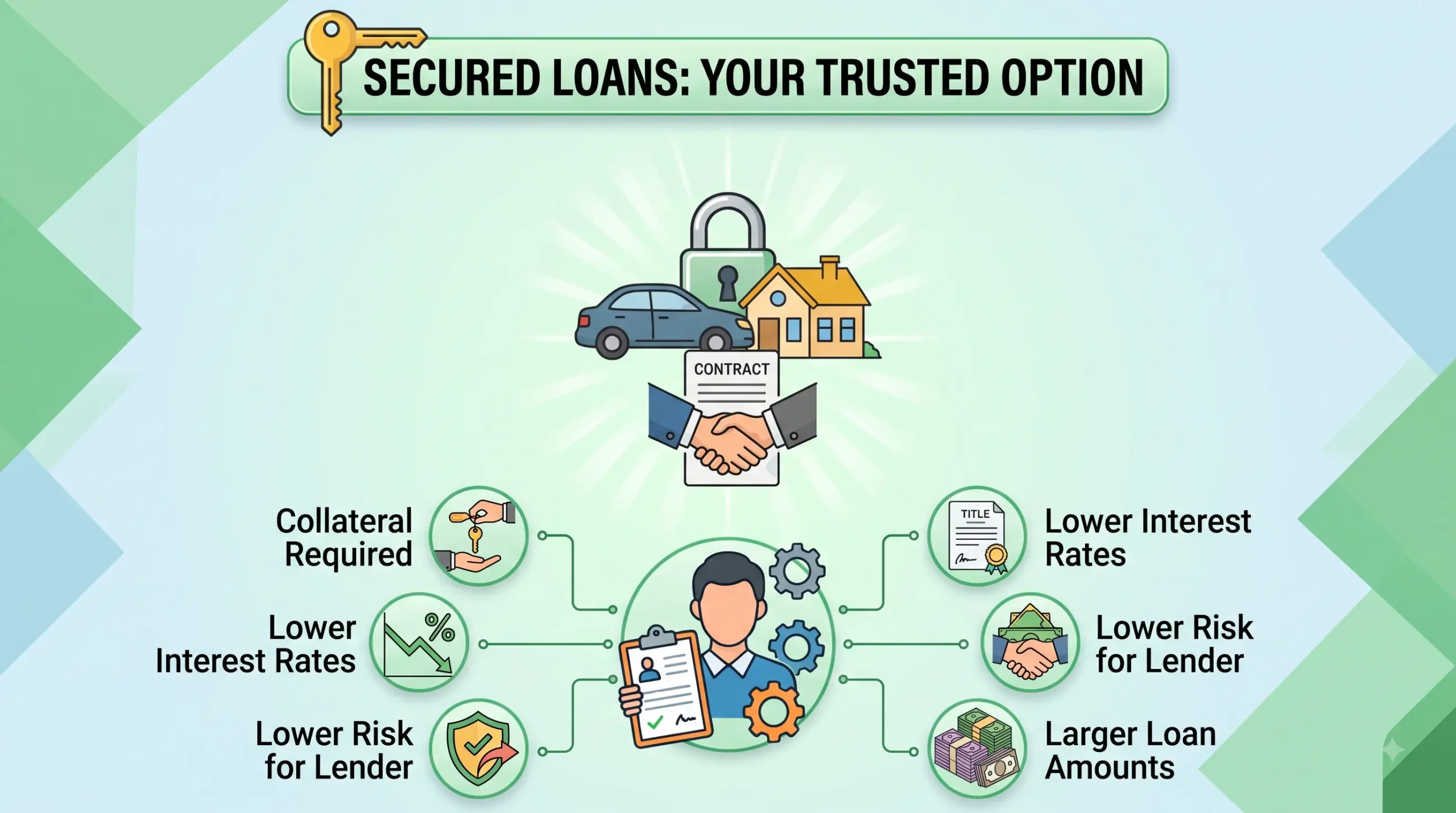
A secured loan is a type of credit backed by an underlying asset known as collateral. When you apply for this type of financing, you pledge a valuable asset to the lender as security against the borrowed funds. If you fail to repay the loan according to the agreed-upon terms, the lender holds the legal right to seize and liquidate the collateral to recover their money.
Common Examples of Secured Loans
Home Loans: Financing used to purchase residential properties, where the property itself acts as the collateral. You can learn more about home financing options through the National Housing Bank.
Loan Against Property (LAP): Leveraging an owned residential or commercial property to secure funds for personal or business use.
Gold Loans: Pledging gold ornaments or bars in exchange for immediate liquidity.
Car Loans: Vehicle financing where the automobile serves as the security until the final installment is paid.
Because the lender has an asset as security, secured loans typically offer comparatively lower interest rates and higher loan amounts, depending on the lender’s valuation policy and the market worth of the collateral.
What Is an Unsecured Loan?
An unsecured loan does not require the borrower to provide any physical asset or collateral. Instead, lenders evaluate your creditworthiness by assessing factors such as your credit history, monthly income, employment stability, existing liabilities, and overall repayment capacity.
Common Examples of Unsecured Loans
Personal Loans: Versatile funds used for weddings, medical emergencies, travel, or debt consolidation.
Credit Card Loans: Pre-approved credit lines or short-term cash advances linked to your credit card.
Unsecured Business Loans: Working capital financing extended to enterprises without requiring business property as collateral.
Certain Short-Term Credit Facilities: Instant digital credit lines and “Buy Now, Pay Later” (BNPL) options.
Since there is no collateral to fall back on if you default, lenders consider unsecured loans to carry a much higher level of risk. This higher risk translates to stricter approval criteria, stricter eligibility checks, and usually higher interest rates compared to secured alternatives. To understand how credit profiles impact these loans, read more about credit reporting standards through CIBIL.
Detailed Differences: Secured vs. Unsecured Loans
To make an informed financial choice, it helps to break down how these two credit types compare across critical parameters:
Collateral and Ownership: Secured loans require you to lock up an asset, though you retain usage rights while making timely payments. Unsecured loans keep your personal and business assets completely free from encumbrances.
Cost of Borrowing: Because secured loans reduce lender risk, they feature more economical Annual Percentage Rates (APRs). Unsecured loans compensate for the lack of security by charging higher interest rates.
Eligibility and Qualification: If your credit score is still developing or recovering, securing a loan with property or gold is often much easier. Unsecured loans, however, demand a robust credit score (typically 750 or above) and a stable, verifiable income source.
Tenure and Flexibility: Secured loans often come with longer repayment tenures (ranging from 5 to 30 years for housing finance), making large ticket sizes manageable. Unsecured loans usually carry shorter tenures ranging from 1 to 5 years.
Which Loan Should You Choose?
Selecting the right financing vehicle depends entirely on your immediate requirements, financial stability, and risk appetite:
Choose a Secured Loan When: You need a large lump sum of money (such as buying a house or funding a major business expansion), have an eligible asset you are comfortable pledging, and want the advantage of lower interest rates and longer repayment windows.
Choose an Unsecured Loan When: You need quick access to funds for short-term needs, do not want to risk any physical assets, and possess a strong income and clean credit profile that qualifies you for competitive interest rates.
The right choice always balances your loan requirement, repayment capacity, and the overall cost structure offered by the lender.
Critical Factors to Consider Before Taking Any Loan
Before signing a loan agreement, evaluate these essential pillars of borrowing:
Interest Rate Dynamics: Compare applicable interest rates across multiple institutions and determine whether the rate is fixed throughout the tenure or floating based on market benchmarks.
EMI Affordability: Calculate your monthly outflows and ensure the Equated Monthly Installment (EMI) fits comfortably within your monthly budget without straining essential expenses.
Loan Tenure Strategy: A longer tenure reduces your monthly EMI burden but significantly increases the cumulative interest paid over the life of the loan.
Hidden Processing and Service Charges: Carefully check processing fees, administrative costs, foreclosure charges, prepayment penalties, and late-payment fees before finalizing your lender.
Realistic Repayment Capacity: Always borrow an amount that aligns with your projected cash flows to prevent default risks and protect your long-term credit health.
Final Thoughts
Secured and unsecured loans serve distinctly different financial needs. A secured loan utilizes collateral to unlock favorable terms and higher funding limits, while an unsecured loan provides flexible liquidity without risking your personal property.
Before committing to any financial product, compare the complete terms, read the fine print, and evaluate your personal financial situation holistically rather than focusing exclusively on promotional interest rates.
If you are unsure which financing route best aligns with your goals, LoanSaarthi can help you compare available market options, evaluate your eligibility, and make a confident, well-informed borrowing decision.