
- September 1, 2026
- neeraj upreti
- 0
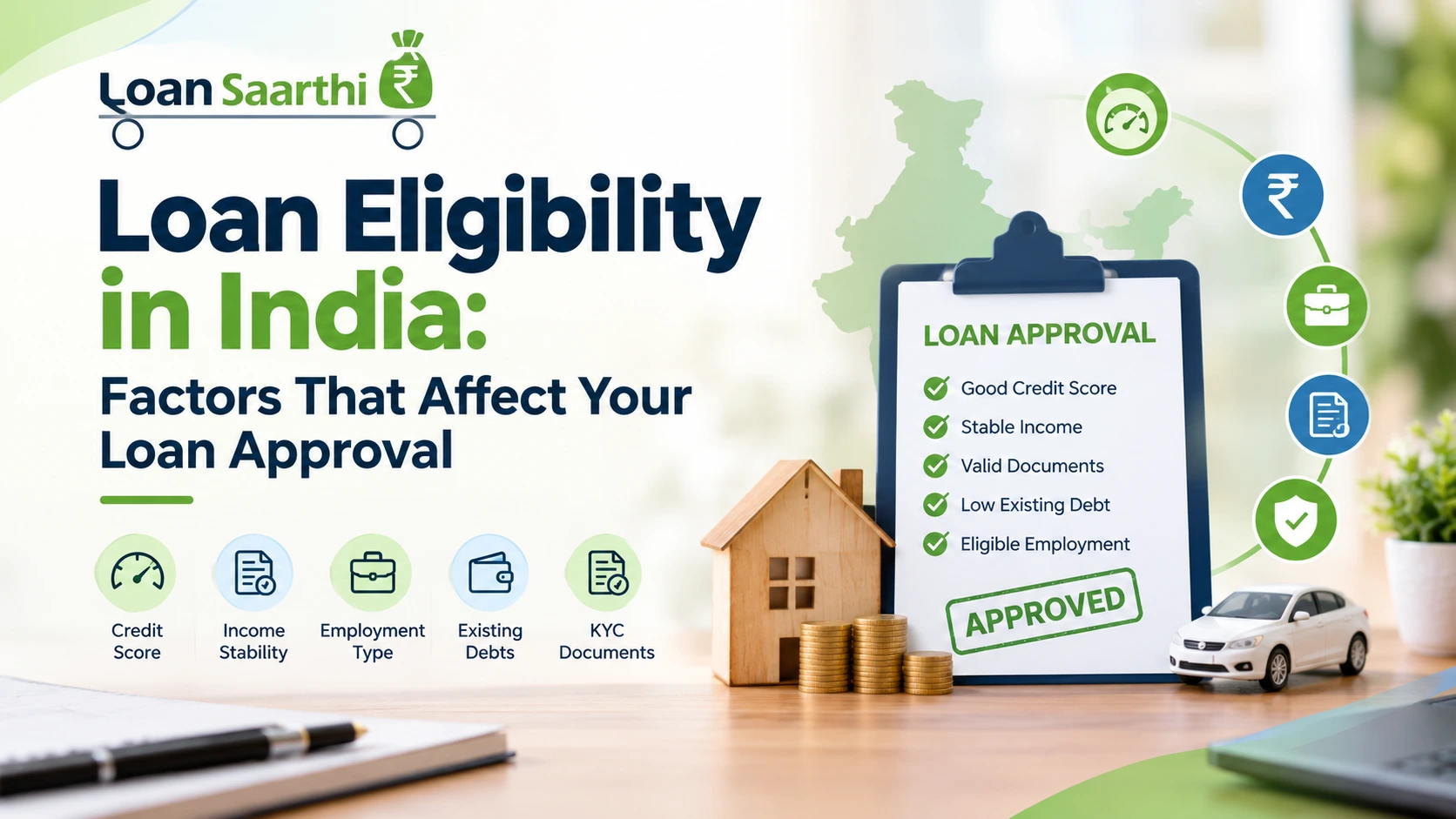
Loan Eligibility in India: Factors That Affect Your Loan Approval
Loan eligibility in India depends on several factors that lenders evaluate before approving a loan application. Whether you are planning to take a personal loan, home loan, business loan, or another type of credit, understanding these factors can help you prepare your application better and avoid common mistakes. Your income, credit history, existing EMIs, employment stability, age, documentation, and the amount you want to borrow can all influence the lender’s decision.
Getting a loan is not simply about filling out an application and waiting for approval. Lenders need to determine whether you have the financial capacity to repay the borrowed amount on time. This is why understanding loan eligibility criteria before applying can make the borrowing process smoother and more informed.
What Is Loan Eligibility in India?
Loan eligibility refers to the criteria a bank or financial institution uses to determine whether an applicant qualifies for a particular loan. Each lender can have its own eligibility requirements depending on the type of loan, loan amount, tenure, applicant profile, income source, and internal lending policies.
In simple terms, lenders want to understand one key thing: Can the borrower comfortably repay the loan?
To answer this, lenders may evaluate factors such as:
- Monthly income and overall financial stability
- Credit score and credit history
- Existing loans and monthly EMI obligations
- Employment or business stability
- Age and proposed loan tenure
- Loan amount requested
- Repayment history
- Required income and identity documents
- Lender-specific eligibility policies
Key Factors That Affect Your Loan Eligibility
1. Credit Score and Credit History
Your credit profile is one of the important factors considered during a loan application. A credit score is based on information in your credit history, including borrowing and repayment behaviour.
A history of making payments on time can support a healthy credit profile. On the other hand, repeated missed payments, defaults, high outstanding balances, or other negative information may make lenders more cautious.
Before applying for a loan, consider checking your credit report for inaccuracies. If you find an error, you can raise it with the relevant credit information company or lender.
For general information about credit reporting and financial regulation, borrowers can also refer to the official Reserve Bank of India website.
2. Monthly Income
Your income is another major consideration when a lender evaluates your loan application. The lender needs to assess whether your earnings are sufficient to manage the proposed EMI along with your existing financial commitments.
For salaried individuals, factors such as salary, employment continuity, and income documentation may be considered. Self-employed applicants may need to provide financial documents that demonstrate their income and business stability.
However, having a high income does not automatically guarantee loan approval. Lenders generally consider income together with other factors such as existing debt and credit history.
3. Existing Loans and EMI Obligations
Suppose you already have a home loan, personal loan, vehicle loan, or other credit obligations. The lender may consider your existing EMIs before deciding whether you can comfortably take on another loan.
For example, if a significant portion of your monthly income is already committed to existing EMIs, taking another large loan could increase your repayment burden.
This is why borrowers should calculate their current obligations before applying for additional credit. Understanding your existing EMI burden can help you select a realistic loan amount.
4. Employment and Income Stability
Stable income can be an important part of the loan assessment process. Lenders may consider employment history, continuity of income, and the nature of your employment.
For self-employed applicants, the lender may review factors such as business continuity, income records, and financial statements, depending on the loan product and lender requirements.
The exact criteria can differ from one lender to another, so borrowers should always check the specific eligibility requirements applicable to their loan.
5. Age and Loan Tenure
Age may also influence loan eligibility because it can affect the proposed repayment period and the lender’s assessment of repayment capacity.
For example, a borrower applying for a long-term loan may be assessed differently depending on their age and income profile. Lenders can have specific minimum and maximum age requirements.
Therefore, before submitting an application, check the lender’s age and tenure conditions for the particular loan product.
6. Repayment History
Your past repayment behaviour can provide lenders with an indication of how you have managed credit in the past.
Consistently paying EMIs and credit card bills on time can help maintain a positive repayment record. Repeated late payments or defaults may negatively affect your credit profile and potentially make future borrowing more difficult.
A simple habit such as setting reminders or using automatic payment options can help reduce the risk of accidentally missing payment deadlines.
7. Loan Amount You Apply For
The amount you request should be aligned with your financial capacity. Applying for a loan amount that is significantly higher than what your income and existing obligations can support may make the application more difficult to approve.
Instead of asking, “How much loan can I get?”, consider asking, “How much loan can I comfortably repay?”
This approach can help you avoid taking on an unnecessarily high financial burden.
8. Documentation
Incomplete or inconsistent documentation can create delays during the loan application process. Depending on the loan type and lender, applicants may be asked to provide identity, address, income, employment, banking, or business-related documents.
Before applying, make sure the information provided in your application matches the supporting documents.
Loan Eligibility: Salaried vs Self-Employed Applicants
Loan eligibility can vary depending on how you earn your income. Salaried and self-employed applicants may be assessed using different documentation and income parameters.
| Factor | Salaried Applicant | Self-Employed Applicant |
|---|---|---|
| Income | Salary and employment income | Business or professional income |
| Income Proof | Salary slips and bank statements may be required | Financial statements, bank records and other documents may be required |
| Stability | Employment continuity may be considered | Business continuity may be considered |
| Credit History | May be considered | May be considered |
| Existing Obligations | Existing EMIs may be assessed | Existing personal and business obligations may be assessed |
Note: Actual eligibility requirements vary by lender and loan product.
Why Can a Loan Application Be Rejected?
There is no single reason why a lender may reject a loan application. Some common reasons can include:
- Weak or limited credit history
- Unfavourable repayment history
- High existing debt obligations
- Insufficient or unstable income
- Incomplete documentation
- Inconsistencies in the application
- Loan amount not matching repayment capacity
- Not meeting the lender’s specific eligibility criteria
A rejected application does not necessarily mean that you will never qualify for a loan. However, it is important to understand the reason for the decision and improve your financial profile where possible before making another application.
How to Improve Your Loan Eligibility
If you are planning to apply for a loan, the following steps may help you prepare your financial profile:
Pay Existing EMIs on Time
Timely repayment is important for maintaining a healthy credit history. Avoid missing EMI and credit card payment deadlines.
Keep Existing Debt Under Control
Before taking another loan, review your existing obligations and determine whether another EMI fits comfortably within your monthly budget.
Check Your Credit Report
Review your credit information periodically and check for incorrect personal information, unfamiliar accounts, or inaccurate repayment information.
Avoid Unnecessary Loan Applications
Do not apply for multiple loans simply to see which lender approves you. Multiple credit applications within a short period can result in multiple credit enquiries and may affect how your credit profile is viewed.
Keep Your Documents Ready
Prepare the documents that may be required for your loan application. Accurate and consistent information can help reduce unnecessary delays.
Choose a Suitable Loan Amount
Borrow only what you need and what you can reasonably repay. A lower loan amount can sometimes result in a more manageable EMI and overall repayment burden.
Loan Eligibility vs Loan Approval: Are They the Same?
No. Loan eligibility and loan approval are not exactly the same.
Eligibility generally refers to whether you meet the lender’s stated criteria for a loan. Approval is the lender’s decision to provide the loan after evaluating your application and relevant information.
Even if you appear eligible based on basic criteria, the lender may conduct further assessment before making a final decision.
| Loan Eligibility | Loan Approval |
|---|---|
| Determines whether you meet basic or specified criteria | Represents the lender’s decision after assessment |
| May consider income, age and credit profile | Can involve a broader review of the application |
| Can help you understand potential suitability | Results in approval, conditional approval, or rejection |
Why You Should Check Eligibility Before Applying
Checking your potential eligibility before applying can help you make better borrowing decisions. It can also help you understand whether the loan amount you are considering is realistic for your financial profile.
Instead of selecting a loan solely because the advertised amount looks attractive, consider the interest rate, EMI, tenure, processing charges, repayment conditions, and your overall financial capacity.
You can also explore Loan Saarthi’s loan guidance and financial assistance to better understand your borrowing options.
Things to Check Before Taking a Loan
- Understand the total amount you will repay.
- Check the applicable interest rate and associated charges.
- Calculate whether the EMI fits your monthly budget.
- Review the loan tenure carefully.
- Understand prepayment or foreclosure conditions, where applicable.
- Read the lender’s terms and conditions before accepting the loan.
- Do not borrow more than your actual requirement.
For information on banking regulations and financial-sector developments, borrowers can refer to the RBI. For financial news and market updates, resources such as Moneycontrol and The Economic Times can also provide useful context.
Frequently Asked Questions About Loan Eligibility in India
1. What is loan eligibility in India?
Loan eligibility in India refers to the criteria used by a lender to determine whether an applicant qualifies for a particular loan. Factors may include income, credit history, age, existing EMIs, employment or business stability, documentation, and lender-specific policies.
2. Does a high credit score guarantee loan approval?
No. A strong credit profile can be helpful, but it does not guarantee approval. Lenders may also consider income, existing obligations, employment or business stability, documentation, loan amount, and their internal eligibility criteria.
3. Can I get a loan if I already have existing EMIs?
It may be possible, depending on your income, existing obligations, credit profile, and the lender’s criteria. The lender may assess whether you have sufficient repayment capacity for an additional EMI.
4. Does income affect loan eligibility?
Yes. Income can be an important factor because lenders generally need to assess whether you have sufficient repayment capacity. The income requirements can vary depending on the lender and loan product.
5. Can self-employed people apply for loans?
Yes. Self-employed individuals can apply for various loan products, subject to the lender’s eligibility requirements. Depending on the loan, they may need to provide financial and business-related documentation.
6. Why was my loan application rejected despite having a good credit score?
A credit score is only one part of the overall assessment. Other factors such as income, existing debt, employment or business stability, requested loan amount, documentation, and lender-specific criteria can also influence the decision.
7. How can I improve my chances of loan approval?
Maintain timely repayments, manage existing debt, review your credit report, keep documents accurate and updated, avoid unnecessary credit applications, and choose a loan amount that matches your repayment capacity.
Final Thoughts
Understanding loan eligibility in India can help you approach borrowing with greater confidence and better financial planning. Your credit history, income, existing EMIs, employment or business stability, age, documentation, and requested loan amount can all influence how a lender evaluates your application.
Before applying, take time to understand your financial position and compare the loan terms available to you. Remember, being eligible for a particular loan amount does not necessarily mean that you should borrow the maximum amount available.
At Loan Saarthi, our aim is to help borrowers understand their loan requirements, explore suitable options, and make more informed financial decisions.
Looking for guidance with your loan requirement? Connect with Loan Saarthi and take your borrowing decision with the right guidance.