
- September 1, 2026
- neeraj upreti
- 0
When an unexpected expense strikes be it medical bills, home repair, or planned festive purchases – getting quick access to funds becomes crucial. Two of the most common borrowing options are Personal Loans and Credit Card Loans (or Credit Card EMIs).
While credit card loans offer one-click convenience, personal loans often save thousands of rupees in total interest over time. Understanding how interest calculation, processing fees, and repayment tenures differ helps you select the right credit option.
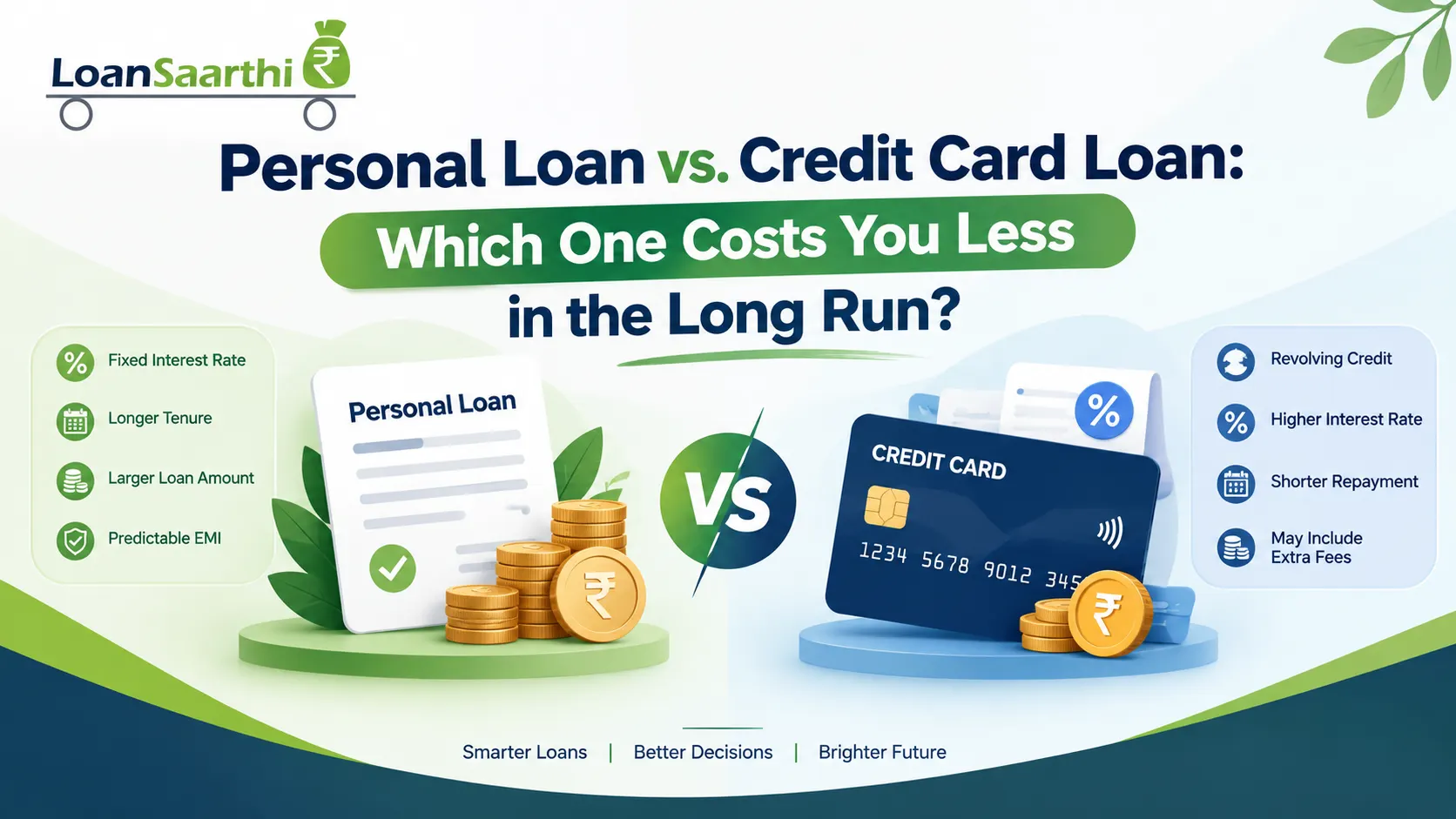
Head-to-Head Comparison :
Feature | Personal Loan | Credit Card Loan / EMI |
|---|---|---|
Typical Interest Rate | 10.5% – 24% per annum (Reducing) | 15% – 42% per annum (often Flat / High APR) |
Calculation Method | Reducing balance method | Often flat rate or compounding monthly balance |
Loan Amount Limit | High (up to ₹25–50 Lakhs depending on eligibility) | Limited to or slightly above available credit card limit |
Repayment Tenure | 12 to 60+ months (Flexible) | 3 to 24 (max 36–48) months |
Disbursal Speed | Instant to 24–48 hours via digital platforms | Instant (Pre-approved) |
Impact on Card Limit | None (Independent credit facility) | Often blocks standard credit card limit |
- Interest Rates: Reducing vs. Flat Rate Trap
The headline interest rate rarely tells the entire story:
Personal Loans Use Reducing Balance: Interest is charged only on the remaining outstanding principal. As you pay monthly EMIs, your interest liability drops steadily every month.
Credit Card EMIs Frequently Quote Flat Rates: A flat 14% rate on a credit card can effectively translate to over 24–26% on a reducing scale because you pay interest on the initial total amount throughout the repayment window.
- Impact on Credit Utilization Ratio (CUR)
Taking a credit card loan often blocks your regular credit limit, pushing your Credit Utilization Ratio well beyond the recommended 30% mark. A consistently high CUR can lower your CIBIL score.
A personal loan is treated as a separate installment loan, adding diversity to your credit mix without maxing out revolving credit limits.
- Repayment Discipline & Hidden Charges
Credit Card Pitfall: Missing an EMI or paying only the “Minimum Amount Due” causes standard credit card interest rates (up to 40%+ APR) and late fees to kick in instantly across your entire balance.
Personal Loan Structure: Operates on automated monthly auto-debit (e-NACH) with fixed, predictable payments and predefined timelines, preventing escalating compounding debt traps.
When Should You Choose Which?
Choose a Credit Card Loan If:** You require a small amount (under ₹30,000–₹50,000), qualify for a genuine 0% interest EMI scheme, and can clear the full balance within 3 to 6 months.
Choose a Personal Loan If:** You need larger funds (₹50,000 and above) for higher expenses, require structured tenures beyond 12 months, and want a low reducing interest rate.
Find the Smartest Borrowing Route with Loan Saarthi :
Avoid overpaying on high-interest credit card debt. With **Loan Saarthi**, compare personalized loan options from leading banks and NBFCs, check real-time eligibility with transparent pricing, and secure quick digital disbursal directly into your account. Check your rate on Loan Saarthi today.
Frequently Asked Questions
1. Is a personal loan cheaper than a credit card loan?
In many cases, yes. Personal loans generally offer lower interest rates than credit card loans and use a reducing balance method. However, the actual cost depends on the lender, loan amount, tenure, processing fees, and your credit profile.
2. Which is better for a small emergency expense?
A credit card EMI or pre-approved credit card loan can be convenient for a small short-term expense, especially when a genuine low-cost or interest-free EMI offer is available. Always check the processing fee, GST, and total repayment amount before choosing it.
3. Does a personal loan affect my CIBIL score?
A personal loan can affect your CIBIL score, just like other forms of credit. Making EMI payments on time can help build a positive repayment history, while missed or delayed payments may negatively affect your credit profile.
4. Does a credit card loan reduce my available credit limit?
It can. Depending on the bank and type of credit card loan or EMI, the amount may block part of your available credit limit until the outstanding amount is repaid.
5. What should I check before taking a personal loan?
Compare the interest rate, processing fee, GST, prepayment or foreclosure charges, loan tenure, EMI amount, and total repayment cost. Looking at the overall cost instead of only the advertised interest rate can help you make a better borrowing decision.
6. Can I use a personal loan to pay off credit card debt?
Depending on the lender and your eligibility, a personal loan may be used to consolidate or repay higher-cost credit card debt. Before doing so, compare the personal loan's total cost with your existing credit card balance and any applicable fees.
7. Which option is better for long-term borrowing?
A personal loan may be more suitable for larger expenses or longer repayment periods because it usually comes with a fixed EMI and a defined tenure. The right choice depends on the interest rate and total cost offered to you.