
- August 31, 2026
- neeraj upreti
- 0
Getting a personal loan is not only about getting your application approved. The interest rate offered by a lender can make a significant difference to the overall cost of borrowing.
One of the important factors lenders consider when evaluating a personal loan application is your credit score and credit history. A stronger credit profile can improve your chances of receiving more favourable loan terms, although your credit score is not the only factor that determines the final interest rate.
In 2026, understanding the relationship between your credit score and personal loan interest rates can help you compare loan offers and make more informed borrowing decisions.
What Is a Credit Score?
A credit score is a numerical representation of your credit history and repayment behaviour.
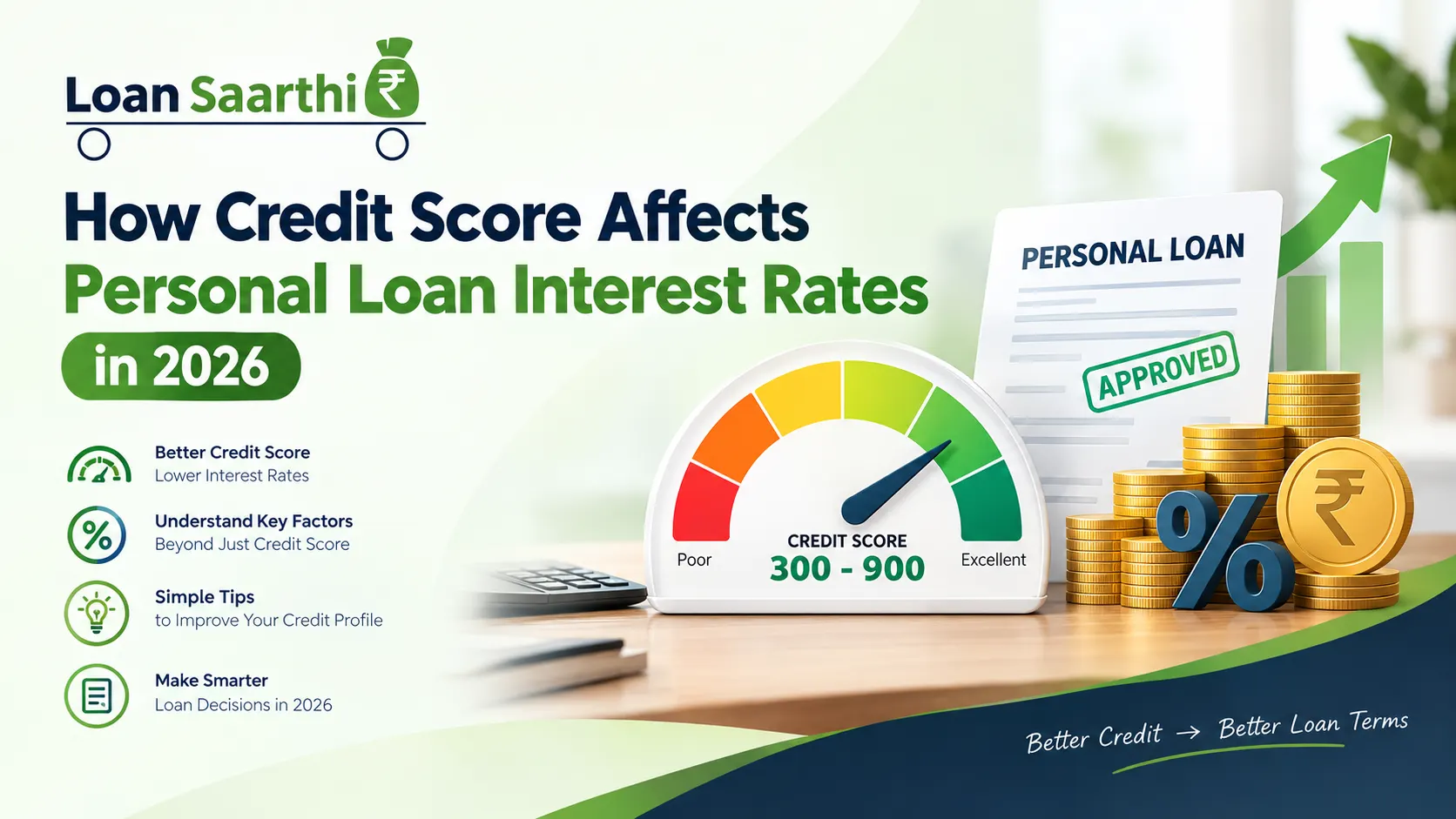
In India, the CIBIL Score is one of the commonly used credit scores. It ranges from 300 to 900, with a higher score generally indicating a stronger credit profile.
Your credit report may contain information about:
Previous and current loans
Credit card accounts
Repayment history
Outstanding balances
Credit enquiries
Credit accounts and their status
Lenders can use this information when assessing your creditworthiness.
For more information about how credit scores are used during loan applications, you can refer to the official CIBIL loan approval process guide.
Why Does Your Credit Score Matter for a Personal Loan?
Personal loans are generally unsecured loans, which means borrowers typically do not have to provide collateral such as property or gold.
Because there is no collateral securing the loan, lenders need to carefully evaluate the borrower’s ability and willingness to repay.
According to CIBIL, your CIBIL Score and Report are important parameters that lenders may consider while evaluating a personal loan application. CIBIL also states that personal-loan interest rates can vary from borrower to borrower and lender to lender depending on factors such as credit history and loan amount.
This means your credit profile can influence both:
Whether you qualify for a personal loan
The terms and interest rate you may be offered
However, a high credit score does not guarantee a specific interest rate.
The final decision depends on the lender and your overall financial profile.
How Does Credit Score Affect Personal Loan Interest Rates?
The relationship can be understood simply:
Stronger credit profile → Lower perceived risk → Potentially better loan terms
Weaker credit profile → Higher perceived risk → Potentially higher rate or stricter terms
For example, imagine two borrowers applying for similar personal loans.
Borrower A has a strong repayment history, limited outstanding debt and a healthy credit profile.
Borrower B has multiple recent credit enquiries, high outstanding balances and a history of delayed payments.
Even if their incomes are similar, the lender may consider Borrower A to represent lower credit risk.
As a result, Borrower A may receive a more competitive interest-rate offer.
The actual rate will still depend on the lender’s policies and other factors.
What Is a Good Credit Score for a Personal Loan?
There is no single credit-score number that guarantees personal loan approval or a particular interest rate.
CIBIL scores range from 300 to 900, and a higher score generally improves the chances of loan approval.
However, borrowers should avoid focusing only on reaching a particular number. Maintaining a healthy credit profile over time is more important.
Some useful habits include:
Paying EMIs on time
Paying credit-card bills before the due date
Keeping credit utilisation under control
Avoiding unnecessary credit applications
Checking your credit report regularly
Managing existing debt responsibly
You can also explore your personal loan eligibility before submitting an application to understand whether the loan amount you want is appropriate for your financial profile.
Factors Other Than Credit Score That Affect Personal Loan Interest Rates
Your credit score is important, but it is not the only factor lenders consider.
1. Income and Repayment Capacity
Lenders want to determine whether your income is sufficient to repay the proposed EMI.
Your monthly income, existing financial commitments and overall repayment capacity can influence the loan decision.
2. Existing Loans and EMIs
If you already have several loans or significant monthly EMI obligations, the lender may consider your existing debt while evaluating a new application.
A manageable debt burden can make your repayment profile stronger.
3. Loan Amount
The amount you want to borrow can also affect the lender’s assessment.
A larger loan may require stronger income and repayment capacity depending on the lender’s policies.
4. Loan Tenure
The tenure affects both your monthly EMI and the total interest you pay.
A longer tenure can reduce the monthly EMI, but it can also increase the total interest cost over the life of the loan.
Before choosing a tenure, use an EMI calculator to compare different repayment scenarios.
5. Employment or Business Stability
Lenders may also consider your employment status, income stability and professional profile when evaluating a personal loan application.
CIBIL lists factors such as income, loan amount, tenure and credit profile among the factors that can influence personal-loan lending decisions.
6. Credit History
Your credit score is only a summary of your credit profile.
Lenders can also look at information in your credit report, including repayment behaviour, outstanding accounts and recent credit enquiries.
How Repayment History Affects Your Credit Profile
Your repayment behaviour is an important part of your credit profile.
Repeated late payments or defaults can negatively affect your credit history and may make future borrowing more difficult or expensive.
On the other hand, consistently making your loan and credit-card payments on time can help demonstrate responsible credit behaviour.
CIBIL identifies payment history, credit utilisation, credit age and enquiries among the factors that influence a CIBIL Score.
You can read more about personal loans and credit profiles on the official CIBIL Personal Loans guide.
Do Multiple Loan Applications Affect Your Credit Score?
Applying for credit can result in a credit enquiry when a lender checks your credit report.
Multiple credit enquiries over a short period may affect how your credit profile is viewed.
Instead of applying to many lenders without understanding their eligibility requirements, compare your options first and apply selectively.
This can help you avoid unnecessary enquiries and keep your borrowing process more organised.
How to Improve Your Credit Score Before Applying for a Personal Loan
If you are planning to apply for a personal loan, improving your credit profile can be a useful step.
Pay Your EMIs and Credit-Card Bills on Time
Payment history matters.
Make sure your EMIs and credit-card dues are paid on or before their due dates.
Setting reminders or using automatic payment options can help avoid accidental delays.
Keep Credit Utilisation Under Control
Using a very high portion of your available revolving credit can affect your credit profile.
Try to keep your credit-card balances manageable and avoid unnecessary borrowing.
Avoid Unnecessary Credit Applications
Do not submit multiple loan applications simply to check whether you qualify.
Instead, understand the eligibility requirements first and apply when you are reasonably confident that the loan suits your financial situation.
Check Your Credit Report Regularly
Checking your credit report can help you identify:
Incorrect personal information
Unknown credit accounts
Incorrect repayment information
Duplicate accounts
Reporting errors
If you find inaccurate information, you can raise a dispute through the appropriate credit-information provider.
RBI has also introduced more frequent credit-information reporting requirements. From January 1, 2025, credit institutions and credit information companies are required to update credit information on a fortnightly basis, subject to the applicable framework.
You can read the relevant RBI notification on credit-information reporting frequency.
Can a High Credit Score Guarantee a Low Personal Loan Interest Rate?
No.
A high credit score can strengthen your loan application, but it does not guarantee a particular interest rate.
The lender may consider several factors, including:
Credit score
Credit history
Monthly income
Existing EMIs
Loan amount
Loan tenure
Employment or business profile
Internal lending policies
CIBIL makes it clear that the final lending decision belongs to the lender.
Therefore, borrowers should compare the complete loan offer, rather than choosing a loan only because it has a low advertised interest rate.
How Much Can a Small Difference in Interest Rate Matter?
Even a small difference in interest rate can affect the total cost of a personal loan.
For example, consider a hypothetical ₹5 lakh personal loan. If two lenders offer different interest rates for the same tenure, the monthly EMI and total repayment amount can differ.
This is why you should compare:
Interest rate
Monthly EMI
Processing fee
Prepayment or foreclosure charges, where applicable
Other applicable charges
Total repayment amount
The lowest advertised interest rate is not necessarily the same as the lowest overall borrowing cost.
What Should You Check Before Taking a Personal Loan in 2026?
Before accepting a personal loan, follow this checklist:
1. Check Your Credit Report
Make sure your credit information is accurate and up to date.
2. Understand the Interest Rate
Ask the lender about the applicable interest rate and understand how it will affect your EMI.
3. Calculate Your EMI
Use an EMI calculator to estimate the monthly repayment before accepting the loan.
4. Compare the Total Cost
Do not look at the interest rate alone. Consider processing fees and other applicable charges.
5. Read the Loan Agreement
Understand the repayment schedule, charges, penalties and other important terms before accepting the loan.
6. Borrow Only What You Need
A larger loan means a larger repayment obligation. Choose an amount that you can reasonably repay.
Final Thoughts
Your credit score can have a meaningful impact on the personal loan interest rate you may be offered in 2026, but it is only one part of the overall lending decision.
Maintaining a strong repayment history, managing existing debt responsibly and avoiding unnecessary credit applications can help build a healthier credit profile.
Before applying for a personal loan, check your credit report, compare eligible loan offers and look beyond the headline interest rate.
The goal should not simply be to get a loan approved. It should be to choose a loan with terms and repayments that fit your financial situation.
If you are considering a personal loan, you can also explore the loan options and guidance available through LoanSaarthi.
Frequently Asked Questions
Does a higher CIBIL Score mean a lower personal loan interest rate?
A higher CIBIL Score can improve your chances of receiving more favourable loan terms because it can indicate a stronger credit profile. However, it does not guarantee a specific interest rate.
What is the CIBIL Score range in India?
A CIBIL Score ranges from 300 to 900. A higher score generally indicates a stronger credit profile.
Can I get a personal loan with a low credit score?
It may still be possible depending on the lender and your overall financial profile. However, a lower credit score can make borrowing more difficult or result in less favourable terms.
How can I improve my CIBIL Score?
Pay your EMIs and credit-card bills on time, manage your credit utilisation responsibly, avoid unnecessary credit applications and regularly review your credit report.
Does applying for multiple loans affect my credit profile?
Multiple lender enquiries over a short period can affect your credit profile. It is better to compare options and eligibility criteria before submitting applications.
Is credit score the only factor used to determine a personal loan interest rate?
No. Lenders can also consider income, existing liabilities, loan amount, tenure, employment or business profile and their internal credit policies.
How frequently is credit information updated?
Under RBI’s updated framework, credit information is required to be updated on a fortnightly basis from January 1, 2025, subject to the applicable reporting requirements.
Disclaimer: This article is for general educational and informational purposes only. Personal loan eligibility, interest rates, fees and approval decisions vary by lender and borrower profile. Always review the applicable loan terms and conditions before making a financial decision.