
- August 20, 2026
- neeraj upreti
- 0
When you need money quickly, both a personal loan and a credit card can seem like convenient options. A credit card can help you make an immediate purchase, while a personal loan can provide a lump sum that you repay over a fixed period.
But here’s the important question:
Which one is actually costing you more?
The answer isn’t always as simple as choosing one over the other. The real cost depends on how much you borrow, how long you take to repay it, the interest or charges involved, and – most importantly – how you manage your repayments.
If you are paying only the minimum amount due on your credit card every month or juggling multiple EMIs and card bills, understanding the difference can help you make a smarter financial decision.
Let’s break it down in simple terms.
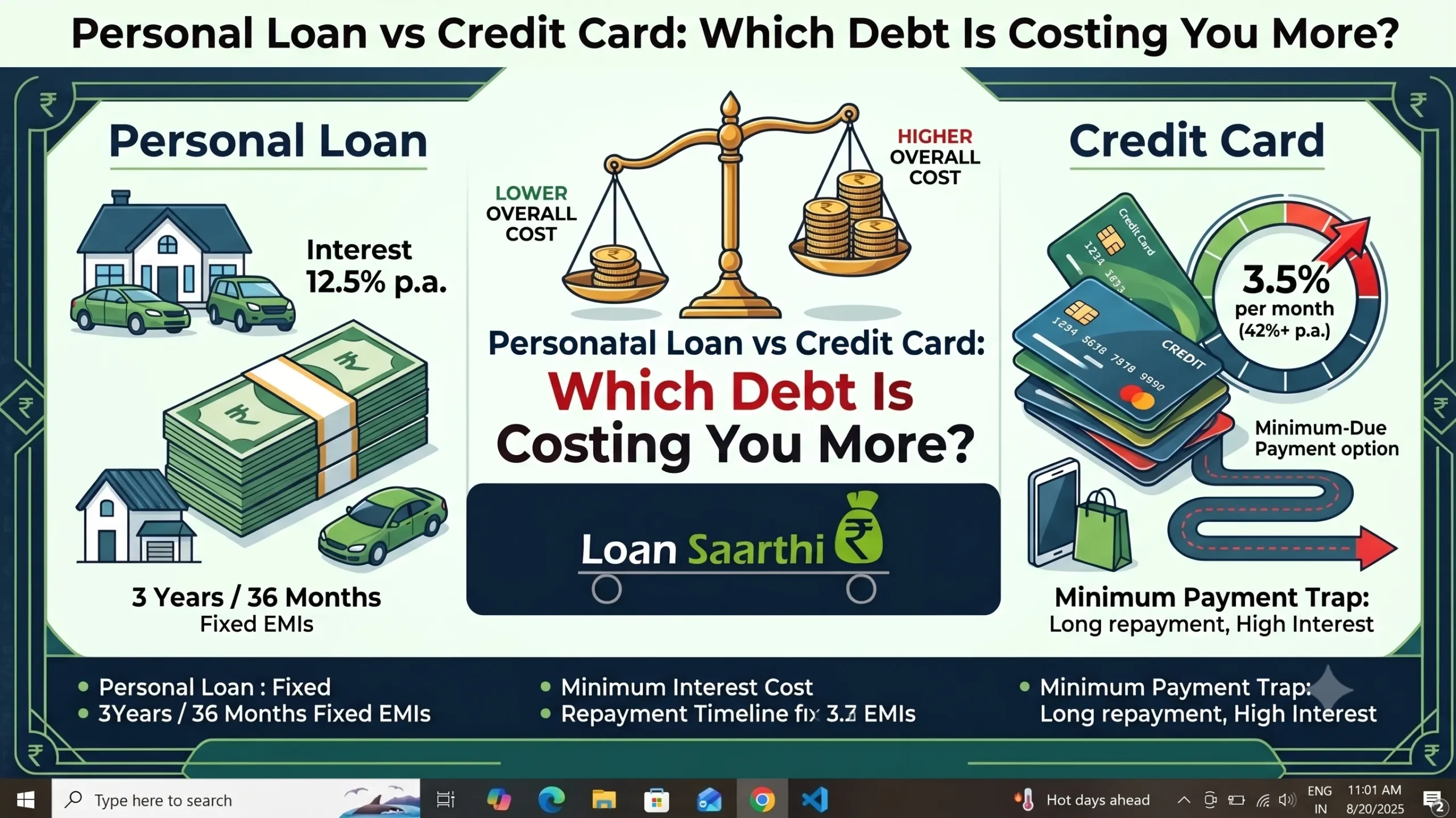
Personal Loan vs Credit Card: The Basic Difference
Both are forms of borrowing, but they usually work very differently.
What is a Personal Loan?
A personal loan is typically a fixed amount borrowed from a bank or financial institution. Once approved, the money is disbursed to you, and you repay it through regular monthly EMIs over an agreed tenure.
Before taking a personal loan, it is important to understand:
- The interest rate
- Processing and other applicable charges
- Loan tenure
- Your monthly EMI
- Prepayment or foreclosure terms, if applicable
The biggest advantage is usually predictability. You generally know how much you need to pay every month and how long your repayment schedule will last.
What is Credit Card Debt?
A credit card allows you to spend up to an approved credit limit. If you pay the full outstanding amount by the due date, you may avoid interest on eligible transactions as per the card’s terms.
However, if you carry the balance forward, interest and other applicable charges may apply.
This is where credit card debt can become difficult to manage.
Why Credit Card Debt Can Become Expensive
Credit cards are extremely useful when used responsibly. They offer convenience, flexibility and can help manage short-term expenses.
The problem usually begins when a large outstanding balance is carried forward month after month.
Imagine this situation:
You have a credit card bill of ₹80,000.
Instead of paying the full amount, you pay only the minimum amount due. It may feel like you have managed the situation because you avoided missing the payment.
But the remaining balance is still there.
Depending on the card’s terms, interest and other applicable charges may continue to apply to the unpaid amount. If you continue spending on the card while carrying a balance, managing the total outstanding can become even more difficult.
This is commonly known as the minimum due trap.
The Minimum Due Trap
Paying the minimum due can help you avoid an immediate missed-payment situation, but it does not necessarily mean your debt is being cleared quickly.
A borrower may end up paying for a longer period because:
- A large portion of the principal remains unpaid.
- Interest may continue to apply to the outstanding balance.
- New spending can increase the total amount owed.
- Multiple cards can make repayment difficult to track.
That is why paying only the minimum amount due repeatedly can turn a short-term borrowing need into a long-term financial burden.
How a Personal Loan Works Differently
With a personal loan, the repayment structure is generally clearer.
For example, if you borrow a specific amount for a fixed tenure, your repayment is divided into monthly EMIs based on the agreed loan terms.
This can make budgeting easier because you know:
How much you need to pay → Every month → Until the loan is repaid
However, a personal loan is not automatically the better choice in every situation.
You should still consider the total cost of borrowing, including the applicable interest rate, processing fees, tenure and any other charges.
A lower EMI also doesn’t always mean a cheaper loan. A longer tenure may reduce your monthly EMI but can increase the total amount paid over time.
Personal Loan vs Credit Card: A Quick Comparison
Factor | Personal Loan | Credit Card |
|---|---|---|
Borrowing structure | Fixed loan amount | Flexible credit limit |
Repayment | Usually through monthly EMIs | Full payment or partial payment as per card terms |
Repayment period | Usually fixed | Can continue as long as the balance remains unpaid |
Monthly planning | More predictable | Can vary depending on spending and outstanding balance |
Best suited for | Planned or larger financial requirements | Short-term spending and eligible purchases |
Risk of long-term debt | Depends on repayment behaviour | Can increase if balances are repeatedly carried forward |
Important: The actual cost will depend on the lender or card issuer, your credit profile, the applicable interest rate, fees and the repayment terms offered to you.
So, Which Debt Is Costing You More?
There is no single answer that applies to everyone.
But in many cases, continuously carrying unpaid credit card balances can become expensive, especially when you repeatedly pay only the minimum amount due.
A personal loan may offer a more structured repayment plan for someone who needs to borrow a larger amount or wants a fixed repayment schedule.
However, you should never take a new loan simply because you want to delay an existing financial problem.
Before borrowing again, ask yourself:
- What is my total outstanding debt?
- How much am I paying every month?
- How much interest and charges are applicable?
- Can I realistically manage another EMI?
- Will the new borrowing actually reduce my overall financial burden?
The goal should be to simplify and manage your debt – not increase it.
When Can a Credit Card Make More Sense?
A credit card can be useful when:
- You need short-term financial flexibility.
- You can repay the eligible outstanding amount in full by the due date.
- You are making a planned purchase within your repayment capacity.
- You understand the applicable charges and terms.
The key is simple:
A credit card works best when you have a clear repayment plan.
Using a credit card without knowing how you will repay the amount can quickly create unnecessary financial pressure.
When Can a Personal Loan Make More Sense?
A personal loan may be worth considering when:
- You need a specific amount for a planned expense.
- You want a structured repayment schedule.
- You can comfortably manage the monthly EMI.
- The total borrowing cost is suitable for your financial situation.
- You have compared available options carefully.
For some borrowers with high credit card balances, a personal loan may also be considered as a way to manage existing debt.
This is often referred to as debt consolidation.
Can You Use a Personal Loan to Pay Off Credit Card Debt?
In some situations, yes.
A borrower may take a personal loan and use it to repay one or more existing credit card balances. Instead of managing multiple due dates and outstanding amounts, the borrower may then have one structured EMI to manage.
But this strategy only works if it improves your financial discipline.
Here’s the mistake many people make:
They take a loan to clear their credit card debt – and then start using the same credit cards again without controlling their spending.
Now, instead of one debt, they may end up with both:
- A personal loan EMI
- New credit card debt
This can create an even bigger financial problem.
If you consolidate debt, the goal should be to create a clear repayment plan and avoid rebuilding the same debt.
5 Questions to Ask Before Choosing Between a Personal Loan and Credit Card
1. How much money do I actually need?
Don’t borrow based only on how much you are eligible to receive.
Borrow based on your genuine requirement and repayment capacity.
2. Can I repay the amount quickly?
If you can repay a credit card balance in full within the applicable billing cycle, the card may be a convenient option for eligible expenses.
If repayment will take a longer period, compare the available borrowing options carefully.
3. What will my monthly repayment look like?
Don’t focus only on getting approval.
Ask:
“Can I comfortably pay this every month?”
Your EMI or repayment should leave enough room for essential expenses, savings and unexpected situations.
4. What is the total cost of borrowing?
Look beyond the headline interest rate.
Check the applicable:
- Interest charges
- Processing fees
- Other applicable charges
- Prepayment terms
- Late payment charges
Understanding the complete cost can help you make a better comparison.
5. Am I solving a problem – or creating a new one?
This may be the most important question.
Borrowing can be useful when it helps you manage an important financial need.
But taking new debt without a repayment plan can simply push the problem into the future.
How to Avoid Falling Into a Debt Cycle
Whether you choose a personal loan or use a credit card, these habits can help you stay in control.
Create a Monthly Repayment Plan
List all your:
- EMIs
- Credit card payments
- Rent
- Household expenses
- Insurance payments
- Other financial commitments
This will give you a clearer picture of how much money is actually available every month.
Avoid Using One Loan to Fund Another Without a Plan
Taking new debt to repay old debt can sometimes be useful, but only when it improves your overall financial situation.
Always calculate the total repayment amount and understand the new commitment.
Try Not to Rely Only on the Minimum Due
Paying only the minimum due repeatedly can keep your debt active for longer.
Whenever possible, work towards reducing the outstanding balance meaningfully.
Avoid Unnecessary Credit Card Spending
Having available credit does not mean you need to use all of it.
Treat your credit limit as a financial tool – not extra income.
Keep Track of Multiple Due Dates
Missing payments can lead to additional charges and may affect your credit profile.
Set reminders or automate payments where appropriate and ensure sufficient funds are available.
Personal Loan vs Credit Card: The Smart Choice Depends on You
There is no universal winner.
A credit card can be a useful financial tool for short-term expenses when you have the ability to repay the outstanding amount responsibly.
A personal loan can provide a structured repayment option when you need a larger amount and can comfortably manage the EMIs.
The smartest choice is not about choosing the fastest money.
It’s about choosing the borrowing option that you can understand, afford and repay responsibly.
Before making a decision, compare your options, read the terms carefully and calculate the impact on your monthly budget.
Because getting a loan may be easy.
Managing the repayment is where smart financial planning begins.
FAQs: Personal Loan vs Credit Card
1. Is a personal loan cheaper than a credit card?
It depends on the interest rates, fees, loan tenure and your repayment behaviour. Compare the total cost of both options before making a decision.
2. Can I take a personal loan to pay off credit card debt?
Depending on your eligibility and the terms offered, a personal loan may be used to manage existing debt. However, make sure the new repayment plan genuinely improves your financial situation.
3. Does paying the minimum due clear my credit card debt?
No. Paying the minimum due does not necessarily clear the entire outstanding balance. The remaining amount may continue to attract applicable interest and charges according to your card terms.
4. Which is better for a large expense: a personal loan or a credit card?
It depends on the amount required, repayment timeline, total borrowing cost and your ability to repay. Compare the available options before deciding.
5. Will taking a personal loan affect my credit score?
Loan applications and repayment behaviour can be reflected in your credit history. Making repayments on time and managing your overall credit responsibly is important.
6. What is the biggest mistake people make with credit card debt?
One common mistake is repeatedly paying only the minimum amount due while continuing to add new spending to the card.
Final Thoughts
A personal loan and a credit card can both be useful financial tools – but only when used with a clear repayment strategy.
Before borrowing, don’t just ask:
“How much money can I get?”
Ask:
“How much can I comfortably repay?”
At Loan Saarthi, we believe better financial decisions start with understanding your options. Compare carefully, borrow responsibly and choose a repayment plan that works for your financial situation.
Disclaimer: Loan terms, interest rates, fees, charges and eligibility vary by lender and borrower profile. Always review the applicable terms and conditions before taking any financial product.