
- August 18, 2026
- neeraj upreti
- 0
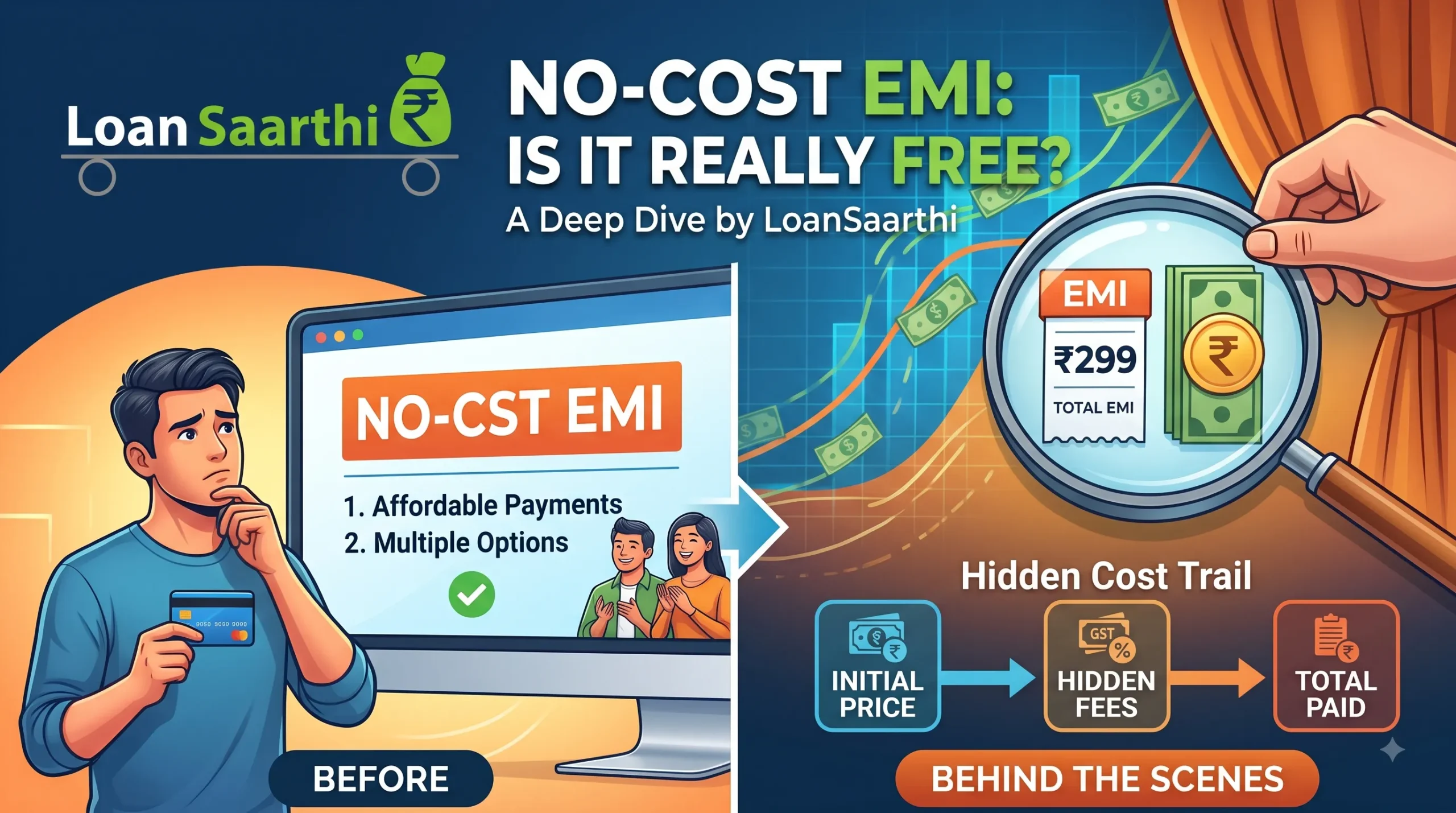
No Cost EMI sounds like the perfect deal : buy what you want today and pay for it in easy monthly installments without paying extra interest. But is “No Cost EMI” really free?
The answer is: not always.
While No Cost EMI can be a convenient way to manage a large purchase, there may be other charges, discounts, processing fees, or terms that can affect the actual cost. Understanding these details before choosing an EMI plan can help you avoid surprises later.
What Is No Cost EMI?
No Cost EMI is a financing option where the interest charged on an EMI purchase is usually offset through a discount or offer from the merchant or brand. For example, suppose you purchase a product worth ₹60,000 and choose a 6-month No Cost EMI. Instead of paying the entire amount upfront, you pay around ₹10,000 per month. It sounds simple – but the important question is: Are you actually paying only ₹60,000? That depends on the terms of the offer.Why Is It Called “No Cost” EMI?
The word “No Cost” can make it sound like there are absolutely no additional charges. However, the interest component may be adjusted through a discount provided by the seller or brand. This means the customer may not see a separate interest charge, but the overall transaction still needs to be checked carefully. That is why you should look beyond the headline offer and check the complete cost.5 Hidden Costs You Should Check Before Choosing No Cost EMI
1. Processing Fees
Some EMI offers may include a processing fee. Even if the interest component is effectively offset, a processing fee can increase the amount you ultimately pay. Always check:- Processing fee
- GST on applicable charges
- Any documentation or convenience fee
2. The “Discount” May Be Part of the Deal
In some No Cost EMI offers, the interest amount is adjusted against an upfront discount. For example, a product may be advertised with a discount for an upfront payment, while the EMI option may work differently. So don’t compare only the EMI amount. Compare the total amount payable under each option.3. Late Payment Charges
An EMI may look affordable when you sign up, but missing an EMI payment can result in additional charges. More importantly, delayed payments can negatively affect your credit repayment history. A No Cost EMI is only useful when the EMI comfortably fits into your monthly budget.4. Cancellation or Pre-Closure Charges
Want to close your EMI early? Don’t assume it will always be free. Depending on the lender and product, pre-closure or cancellation terms may apply. Before taking the EMI, understand what happens if you want to repay the outstanding amount earlier than scheduled.5. It Can Encourage Unplanned Spending
This is perhaps the biggest hidden cost. When a ₹50,000 purchase is presented as “only ₹4,167 per month,” the purchase can feel much more affordable than it actually is. But ₹4,167 is still an additional monthly commitment. If you already have personal loan EMIs, credit card payments, rent, bills, or other financial commitments, another EMI can put pressure on your monthly budget.No Cost EMI vs Paying Upfront
So, which is better? There isn’t one answer for everyone. Paying upfront may make sense if you have enough savings and the purchase doesn’t affect your emergency fund. No Cost EMI may make sense if you want to spread the payment over several months and the total cost and terms are genuinely suitable for your budget. The key is not simply choosing the option with the lowest-looking monthly payment. Look at the total cost and your overall financial situation.Is No Cost EMI Good for Your Credit Score?
Using an EMI facility does not automatically improve or damage your credit score. What matters is how responsibly you manage the repayment. Making your EMIs on time can help demonstrate responsible credit behavior. Missing payments, however, can negatively affect your credit profile. So, before taking an EMI, ask yourself: “Can I comfortably pay this EMI every month until the loan is completely repaid?” If the answer is yes, the EMI may be manageable. If the answer is no, the “No Cost” label may not be worth the financial pressure.Before You Choose No Cost EMI, Use This Simple Checklist
Before clicking “Buy Now,” check:- Total product price
- Total amount payable through EMI
- Processing or convenience fees
- Applicable taxes
- EMI tenure
- Late payment charges
- Pre-closure or cancellation terms
- Impact on your existing monthly commitments
The Real Cost Isn’t Always the Interest
The biggest lesson is simple: “No Cost EMI” doesn’t necessarily mean “No Cost Decision.” The real cost can include fees, missed-payment charges, financial pressure, and the impact of adding another monthly commitment to your budget. EMIs can be useful financial tools when used wisely. The key is to understand the complete terms and choose an option that fits comfortably within your repayment capacity.Final Takeaway
Before choosing a No Cost EMI, don’t just ask: “How much is my EMI?” Ask: “How much will I actually pay, what charges apply, and can my monthly budget comfortably handle it?” At Loan Saarthi, we believe that choosing a financial solution should be about understanding your needs – not simply choosing what looks affordable at first glance. Make an informed decision today. Because the best financial decision isn’t always the one with the lowest EMI – it’s the one that fits your financial plan.Read more: 1-Extra-EMI Home Loan Prepayment Hack
Reference: Reserve Bank of India